
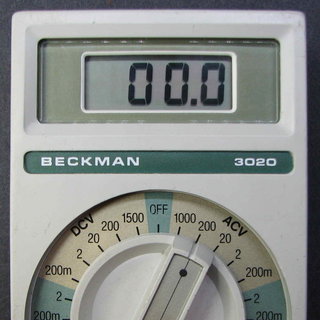
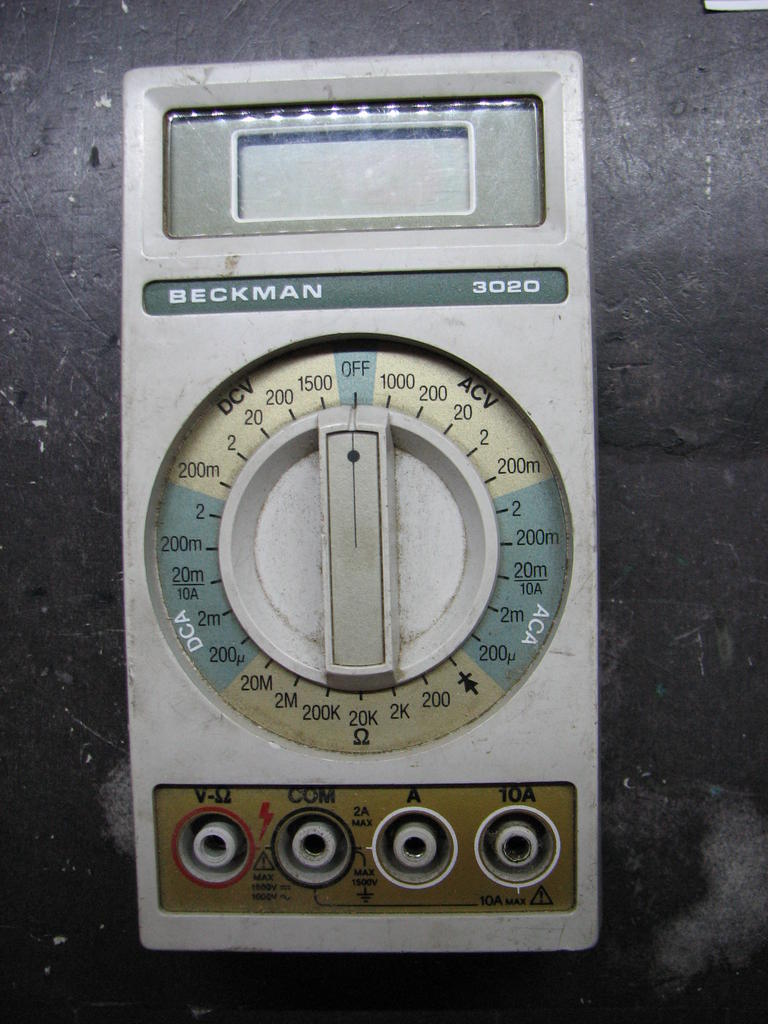
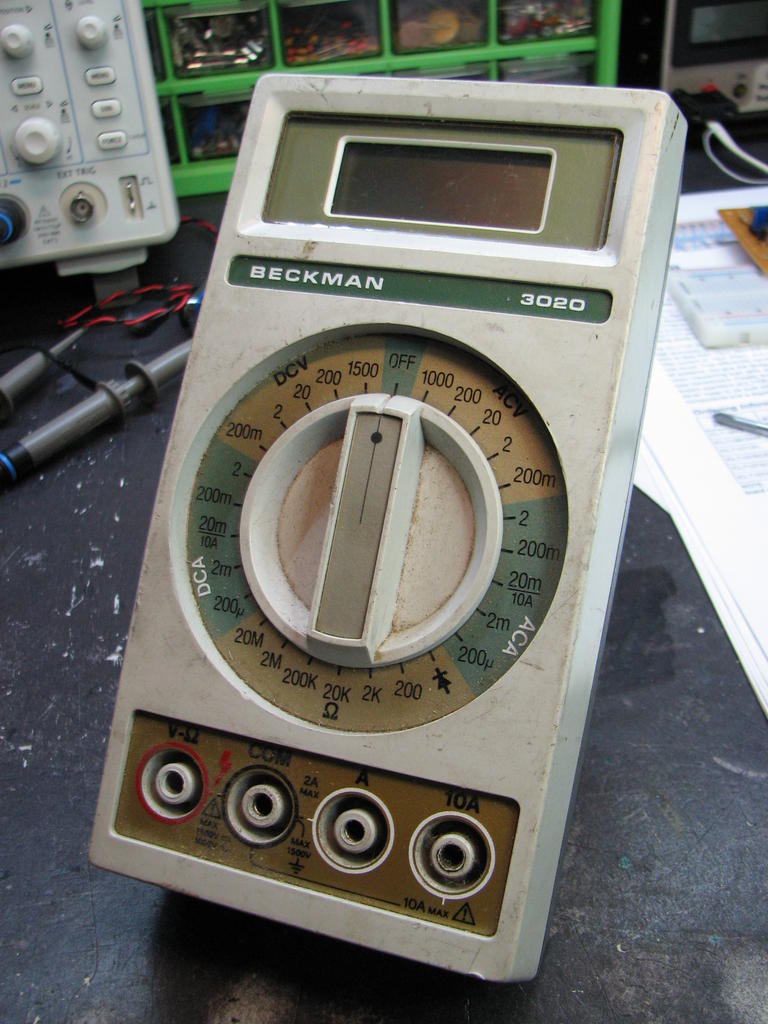
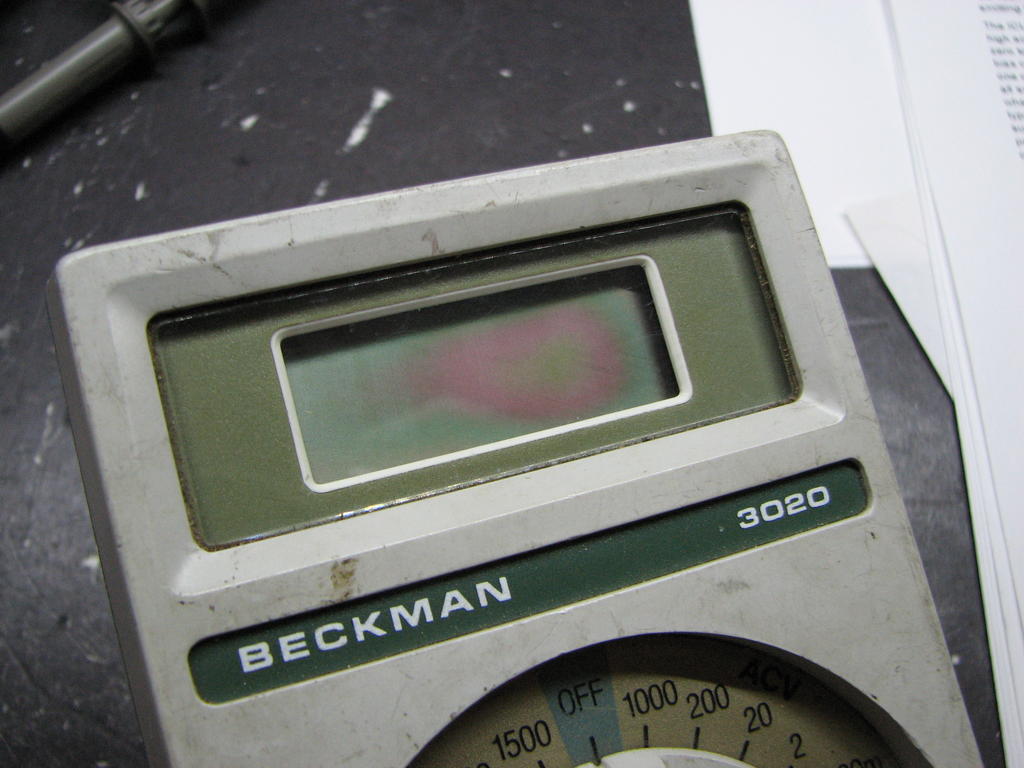
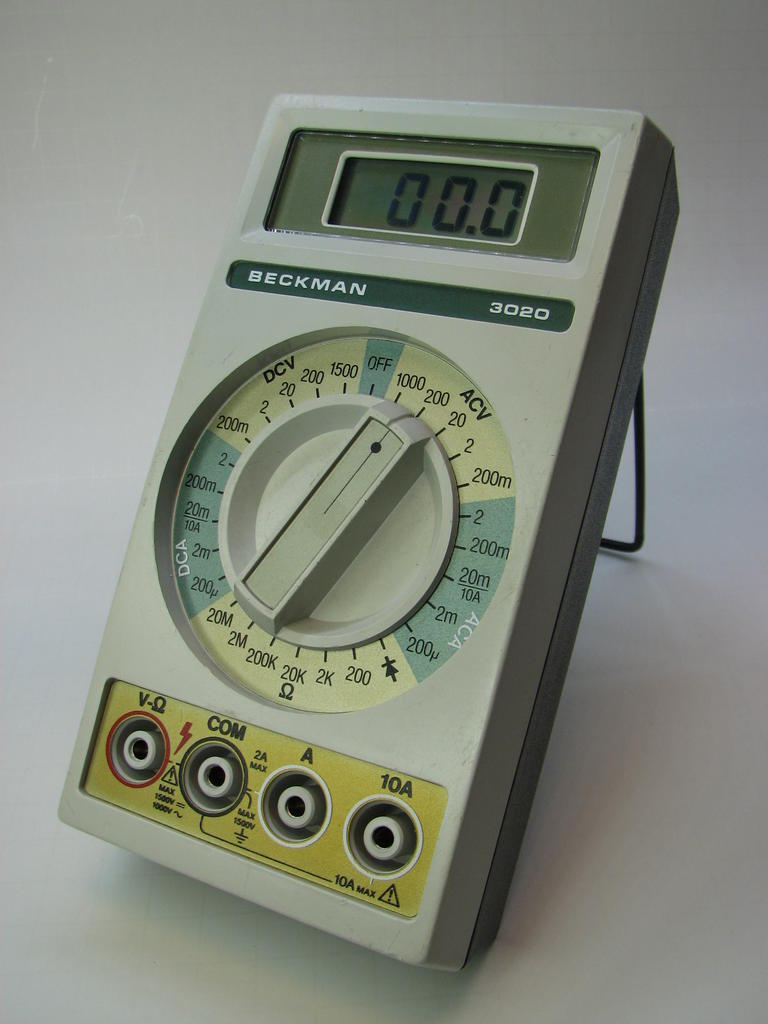
Handheld digital multimeters were just beginning to gain popularity in the late 1970s. Fluke was there of course, but so was Beckman. This is a Beckman 3020 3½-digit 2000-count model that dates to 1979. It has the classic Beckman ‘look’ and rotary switch design that persisted for many years, even after the Beckman Industrial division was absorbed by Wavetek circa 1992.
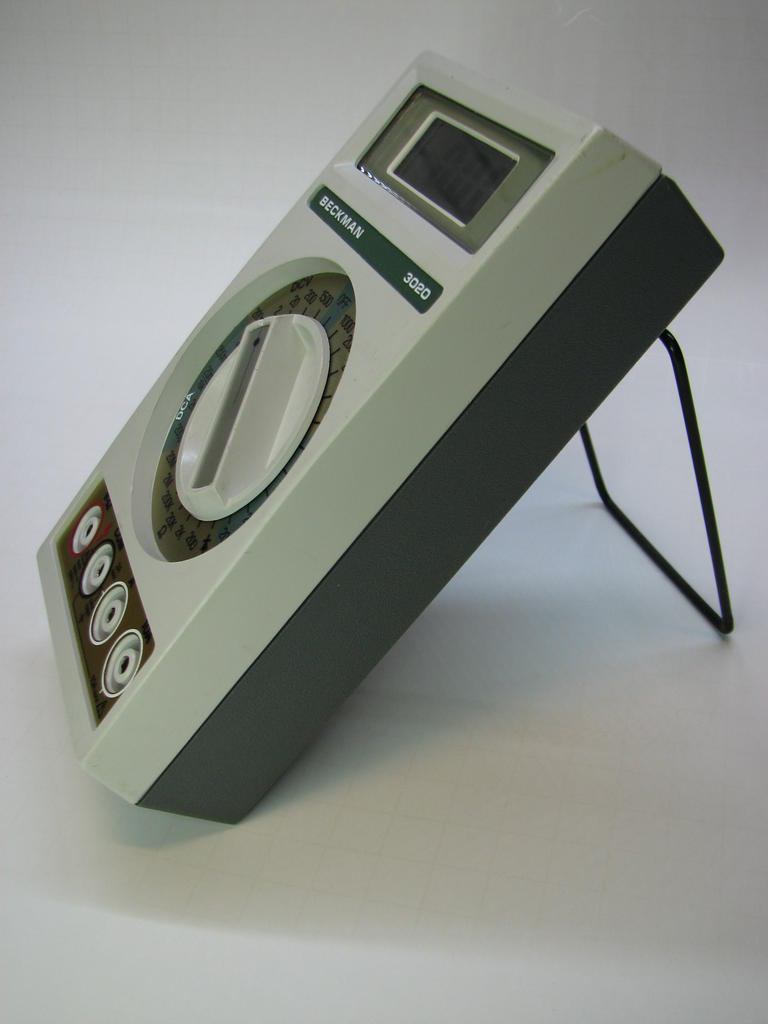
It arrives dirty and completely non-functional, with no display at all. The LCD has a disturbing area of discoloration in the middle, so it might be bad. This unit has an interesting green-and-gold color scheme. Unlike later models with a plastic tilt stand, this one has a stand made of stiff music wire. It can be removed easily, flipped over, and re-inserted to function as a hanger.
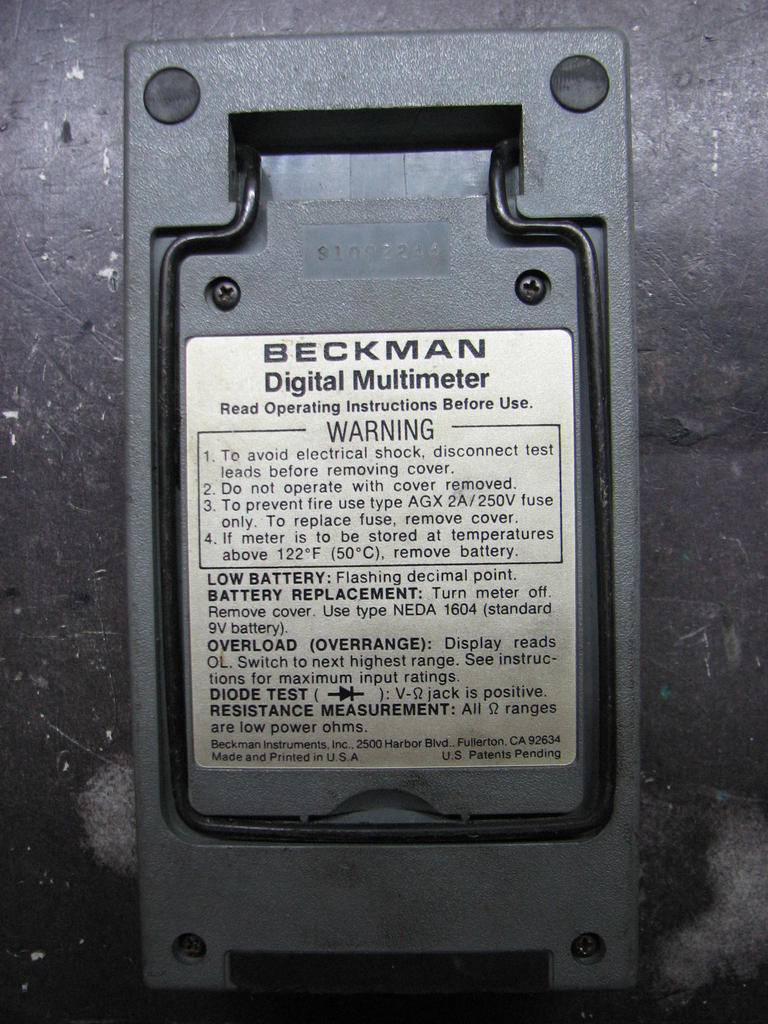
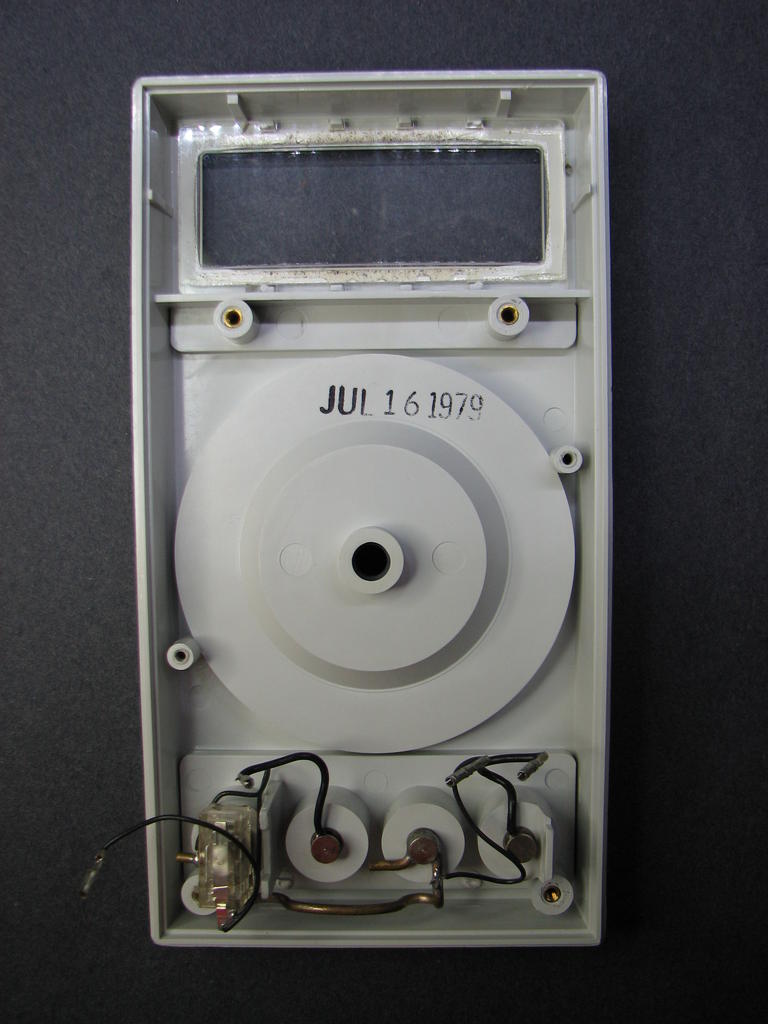
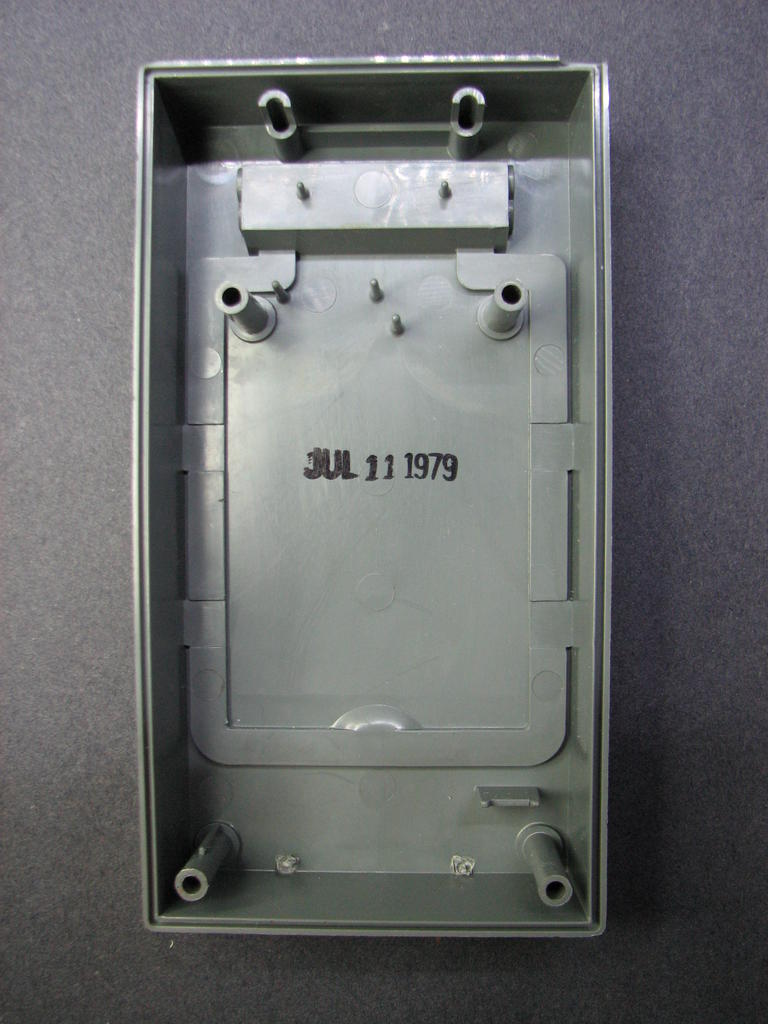
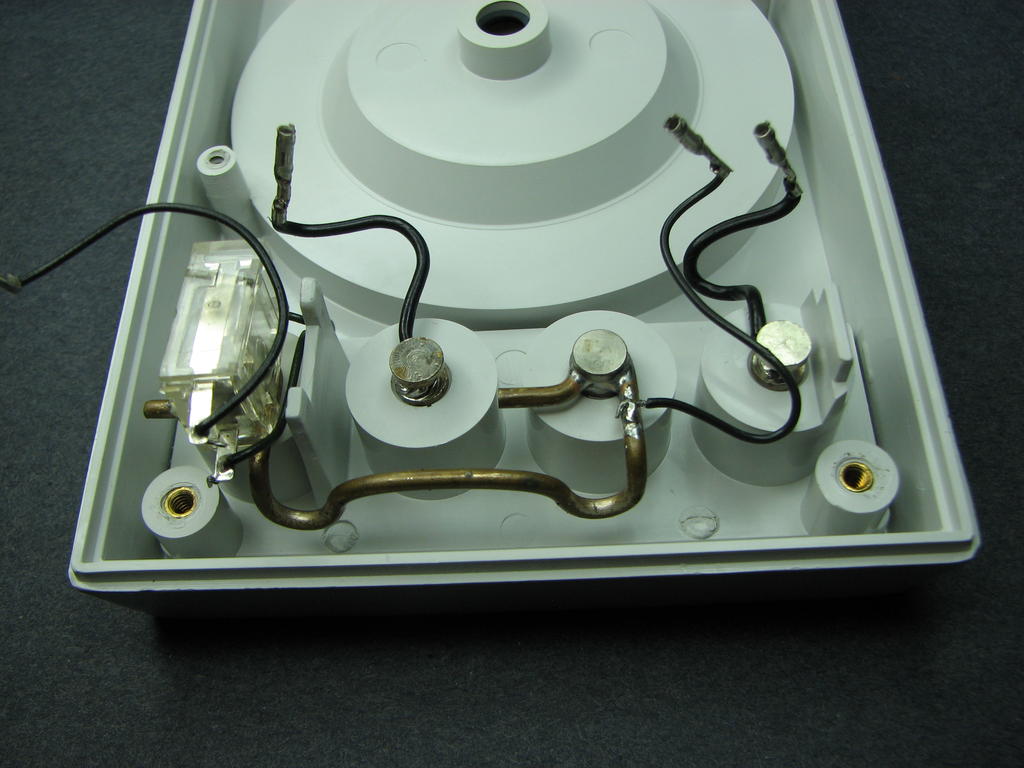
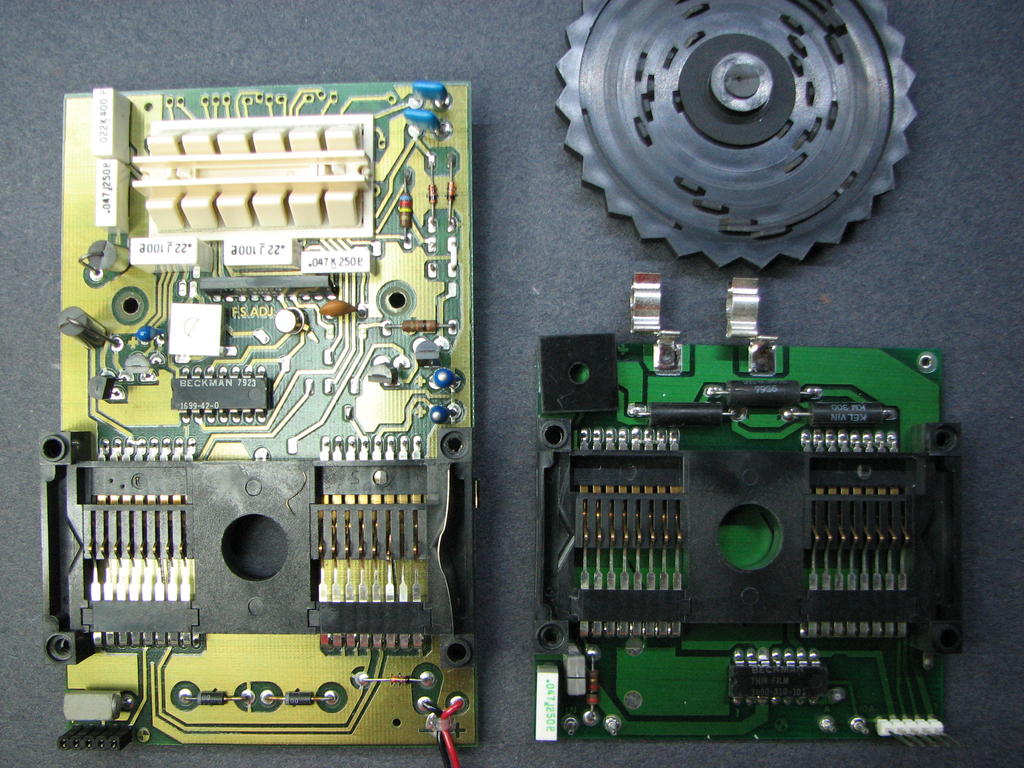
Opening the meter up reveals the usual Beckman two-board construction with a large rotary switch sandwiched in-between. Stamped on the inside of both the front and back parts of the case is proof of the unit’s age. It was manufactured in July 1979. Interestingly, the 10A shunt is soldered directly on the input jacks, which are nice machined tubes embedded in the plastic front cover. The 10A jack also has some sort of switching mechanism activated by a plastic plunger inside the jack. [In later observation, it was determined that inserting a plug into the jack switched the voltage sense line from the on-board current shunt to the 10A shunt.]
Melting Point
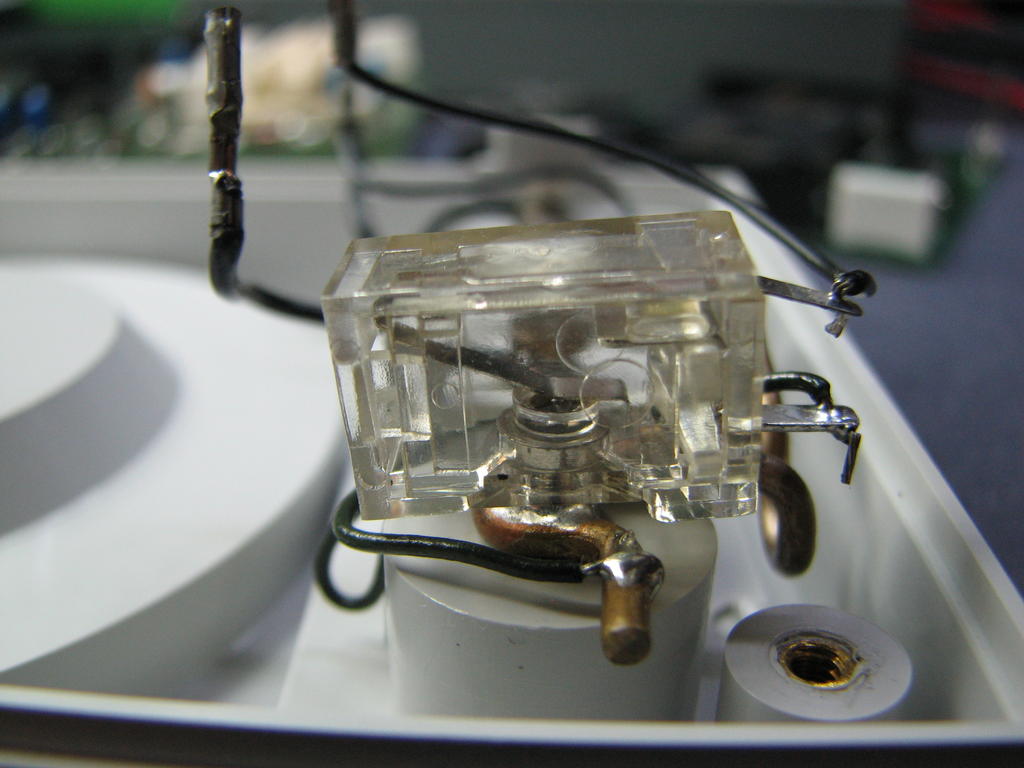
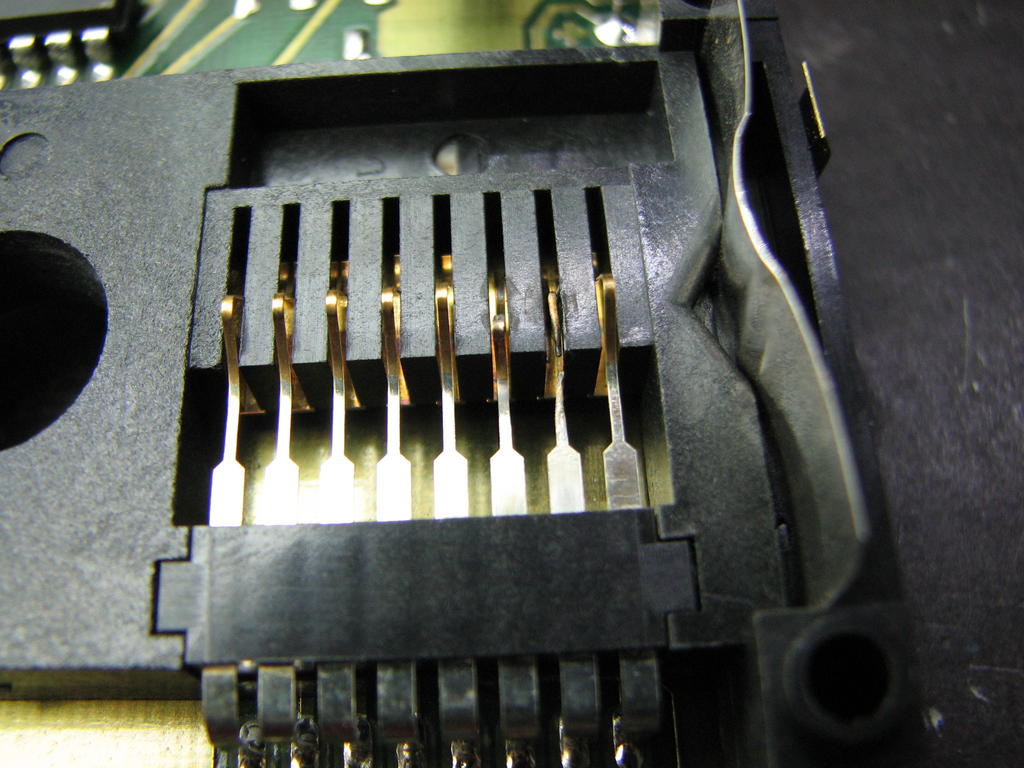
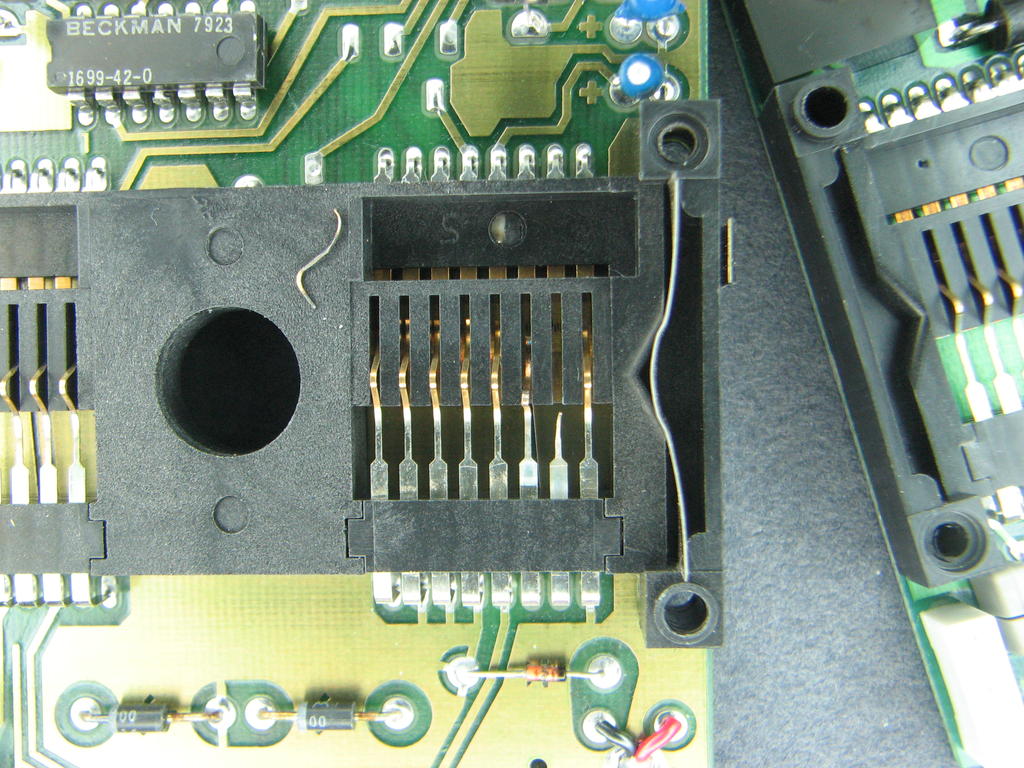
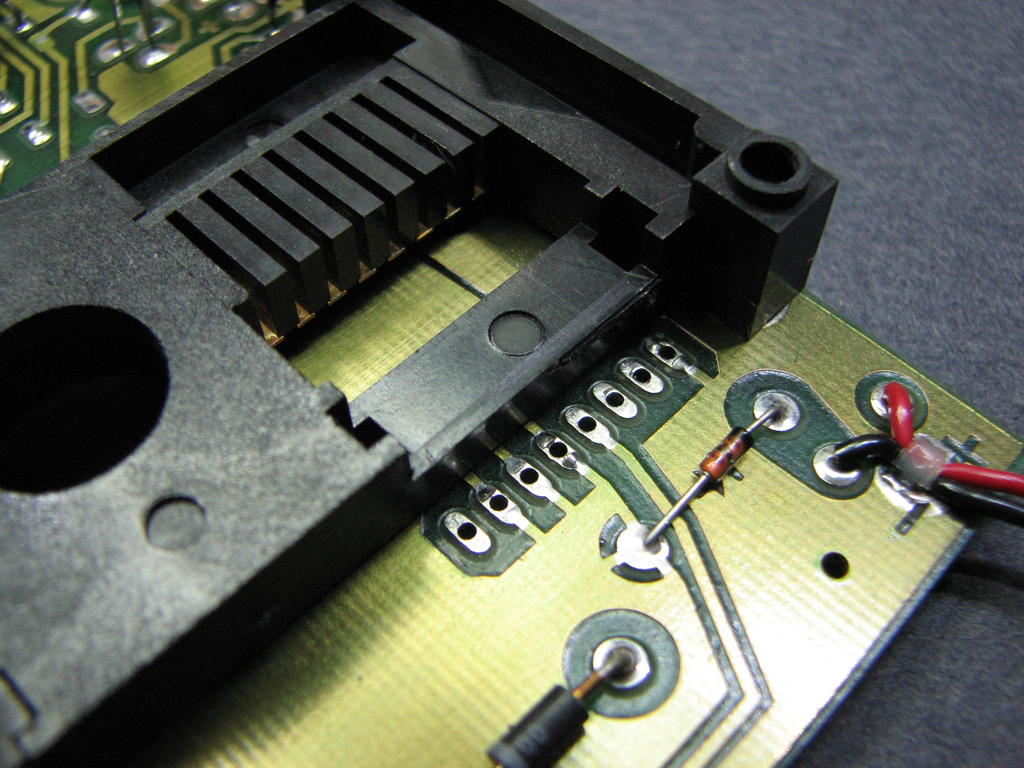
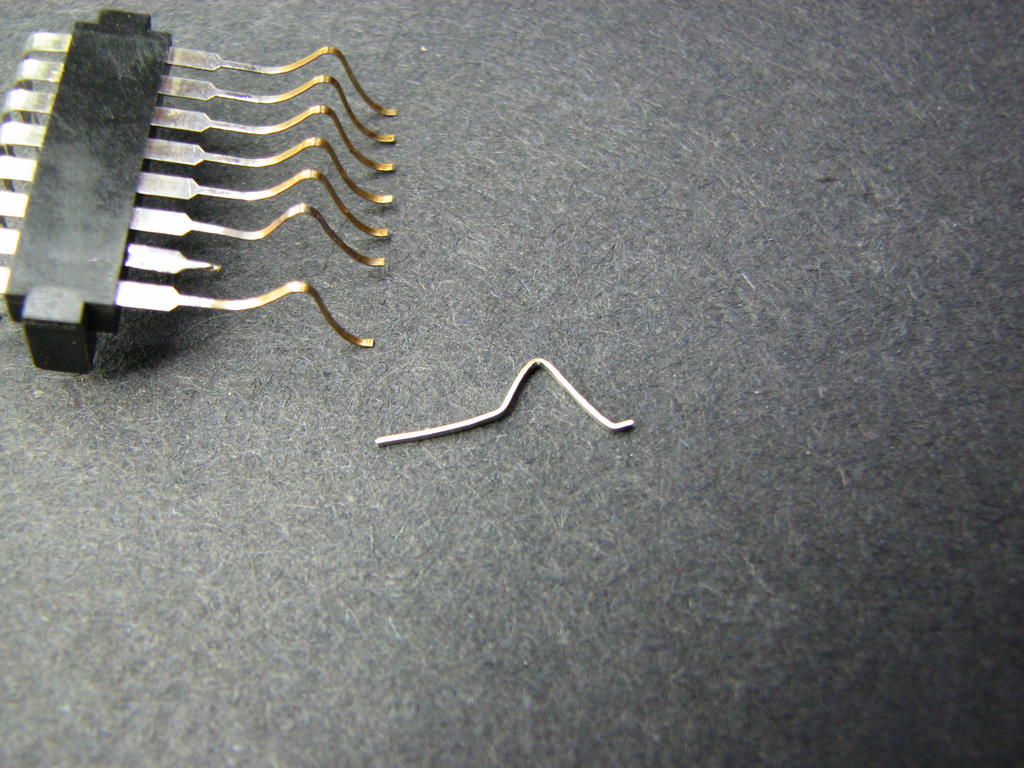
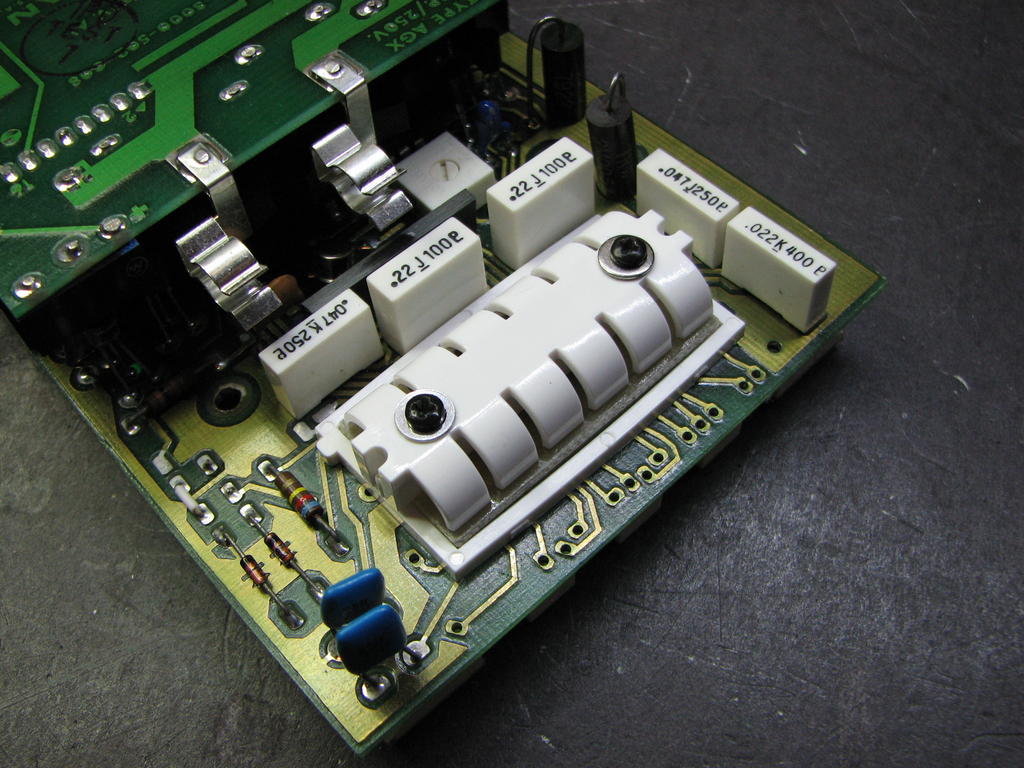
Seconds after removing the screws that hold the halves of the large rotary switch mechanism together, the first problem with this unit becomes obvious. The switch consists of 4 groups of thin metal leaves that are essentially just SPST switches, activated by protrusions on the big rotating disc in the middle. Two of the leaves in the right-hand group on the bottom board are mangled, indeed one of them appears to have melted completely in two. This is going to be interesting…
DMM Repair, Extreme Edition
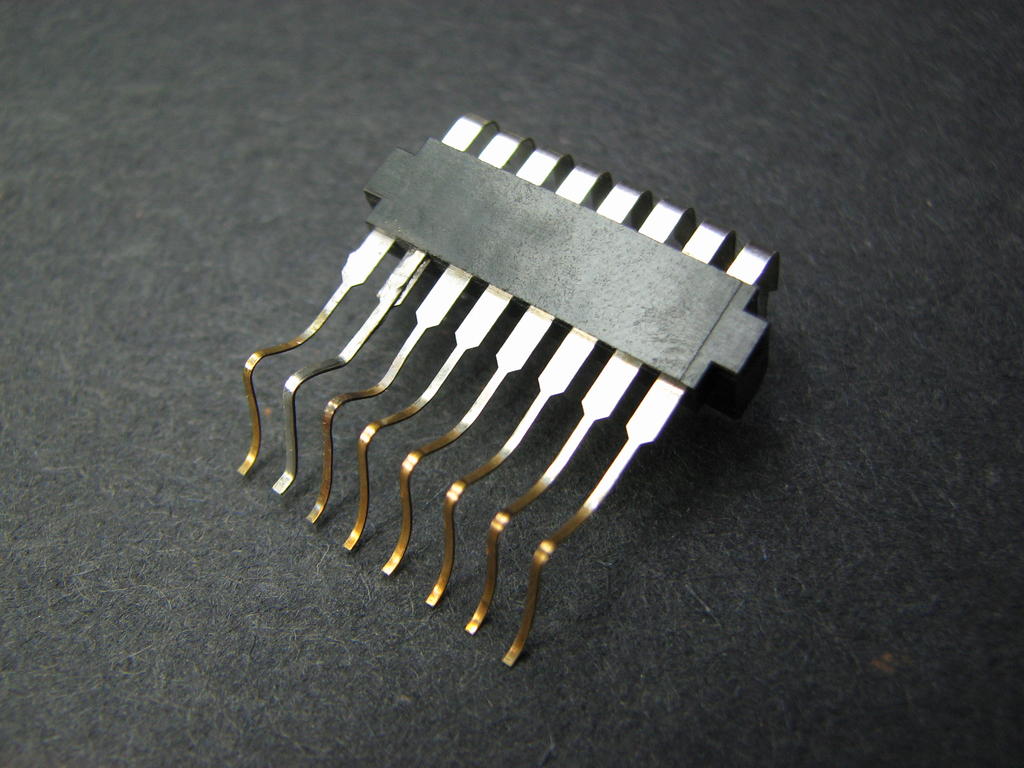
Looking closely at the construction of the switch, it appears that if the leads are desoldered, the entire block can be lifted up and out for some possible extreme repair activity. Careful desoldering reveals that is is indeed the case, and the group of contacts lift out fairly easily, after all the solder is removed from the holes.
With full access to the leaves, it looks like the one that was mangled but not melted can be re-shaped. What is interesting about these leaves is that they are much more ductile than one would expect. They exhibit a little bit of ‘springiness’, but not much. This allows for bending the mangled one back in shape without breaking it, which you might expect with springy, brittle metal. On the other hand, it makes these contacts very, very fragile.
If you’re reading this because you have one of these meters, be very careful when working around these contacts, they will deform easily if you snag one or press on it too hard.
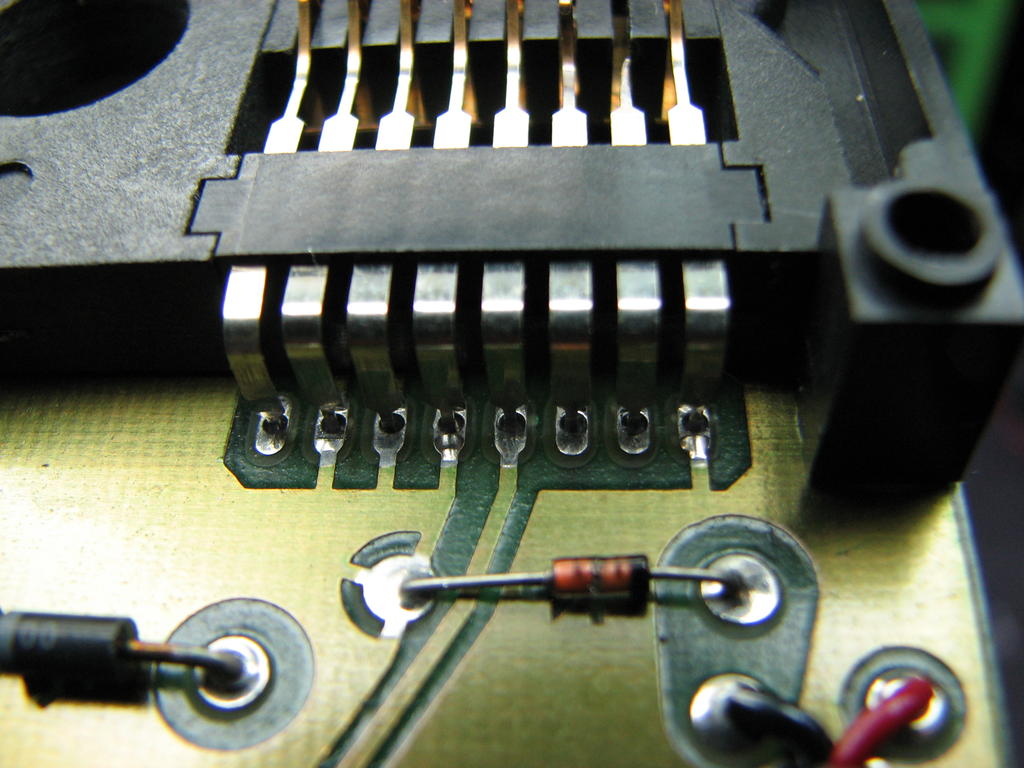
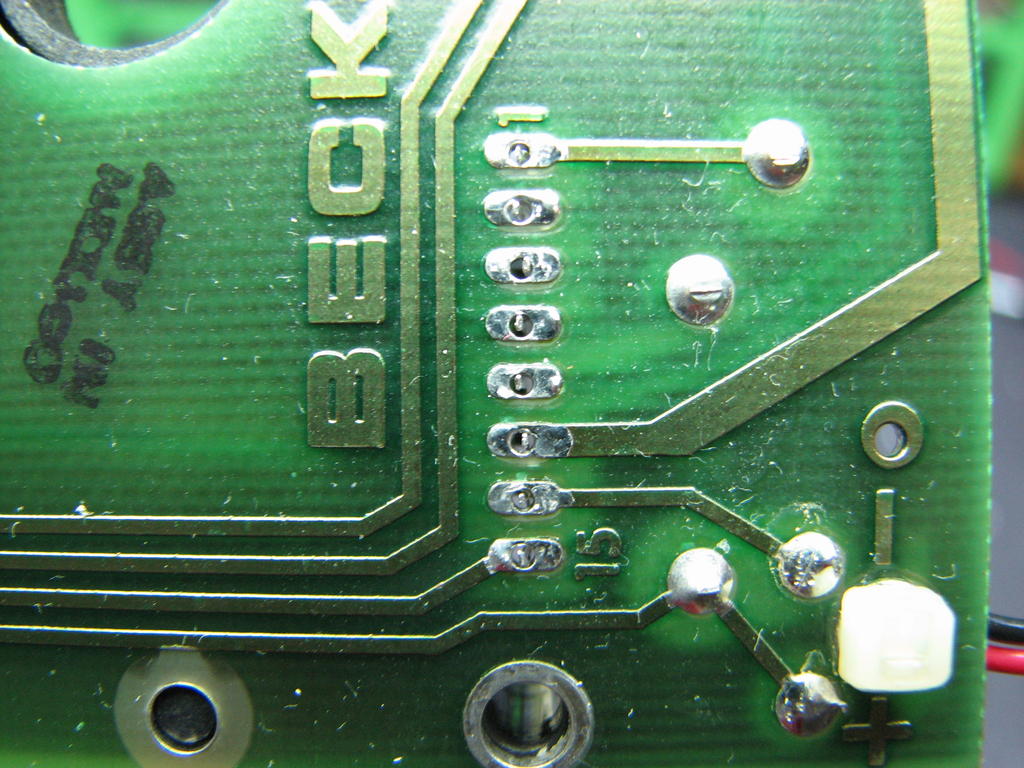
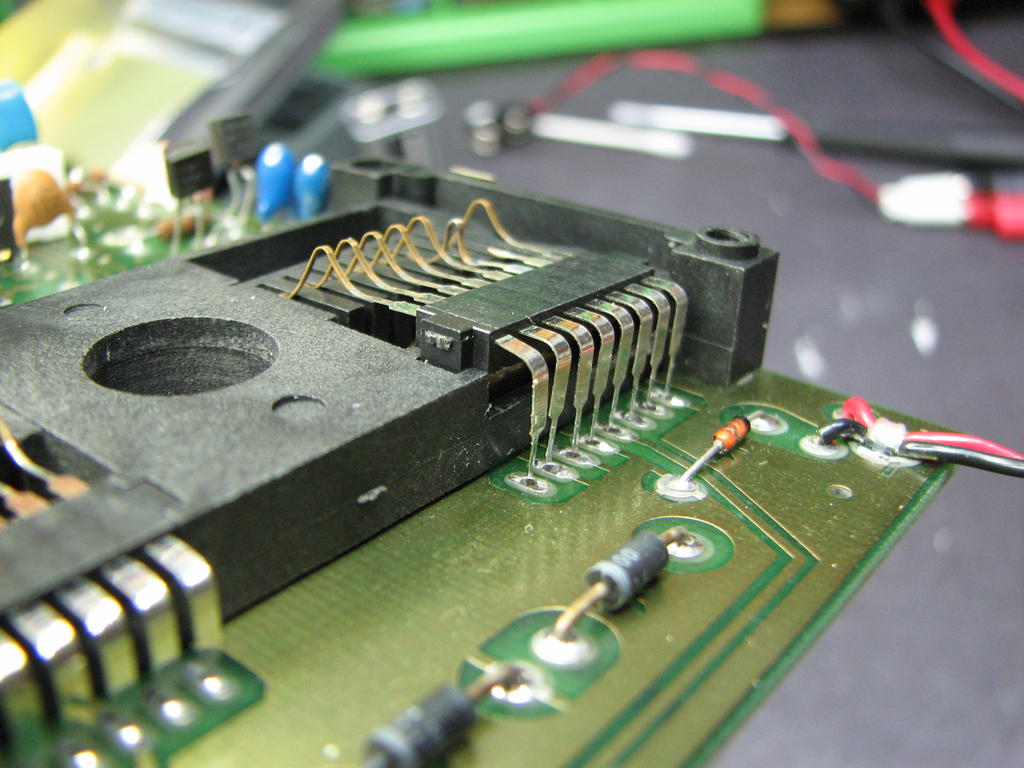
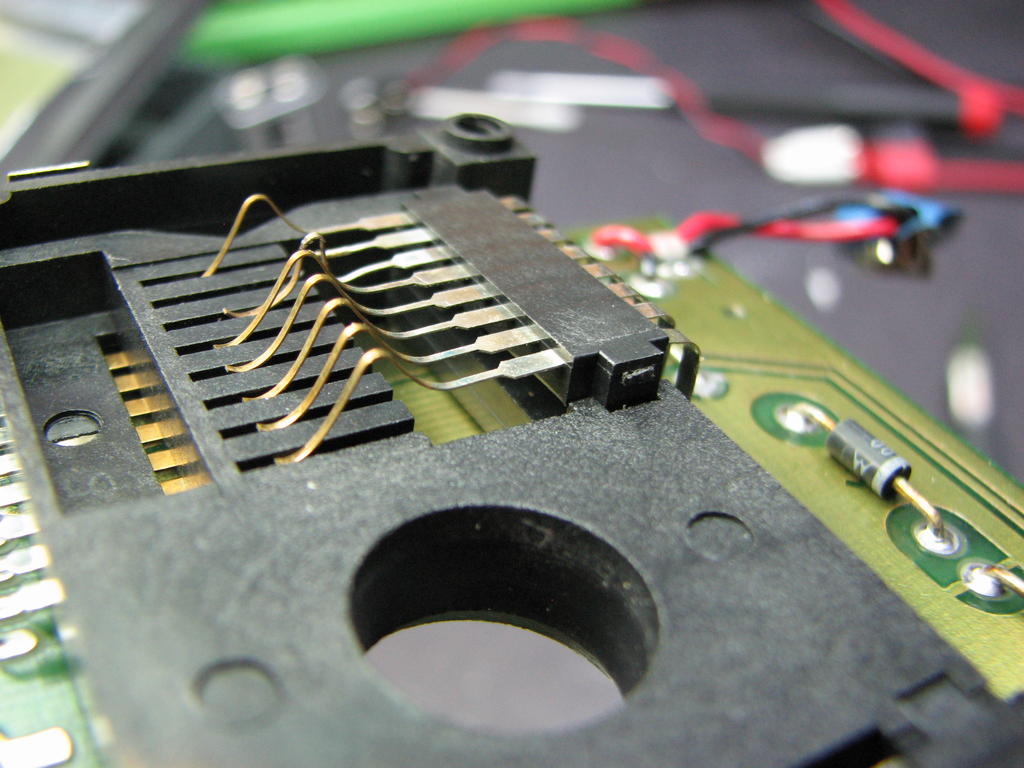
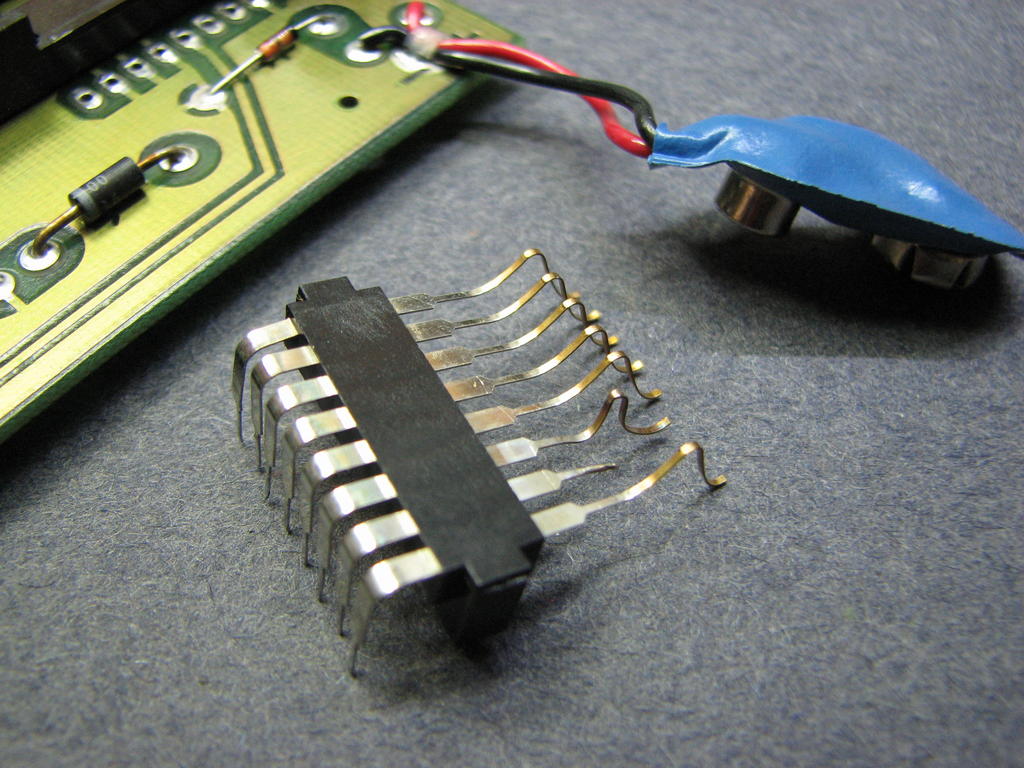
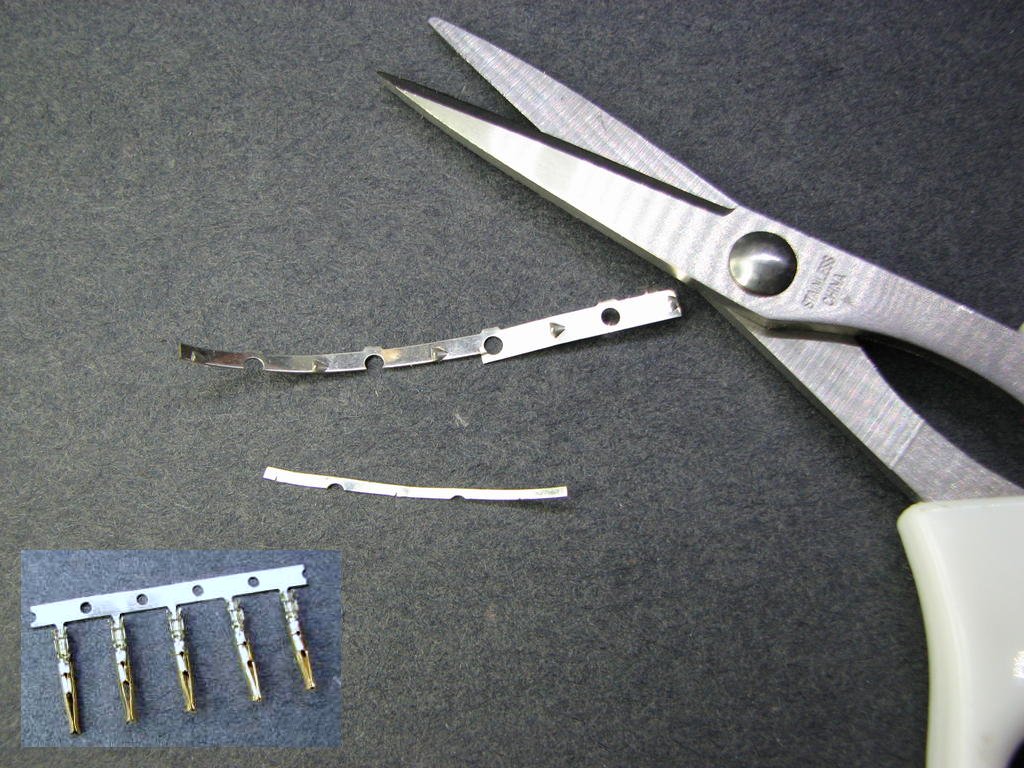
After searching through every drawer and box in the workshop for some kind of suitable metal to make a new leaf out of, I finally settled on a scrap from some Molex-type connector pins. When you buy a quantity of new pins, they’re often connected together on a ‘tree’, which is just the left-over material from stamping and forming the pin. This metal is soft enough to bend easily, but has just a bit of spring in it. I hope it works.
Turning Over A New Leaf
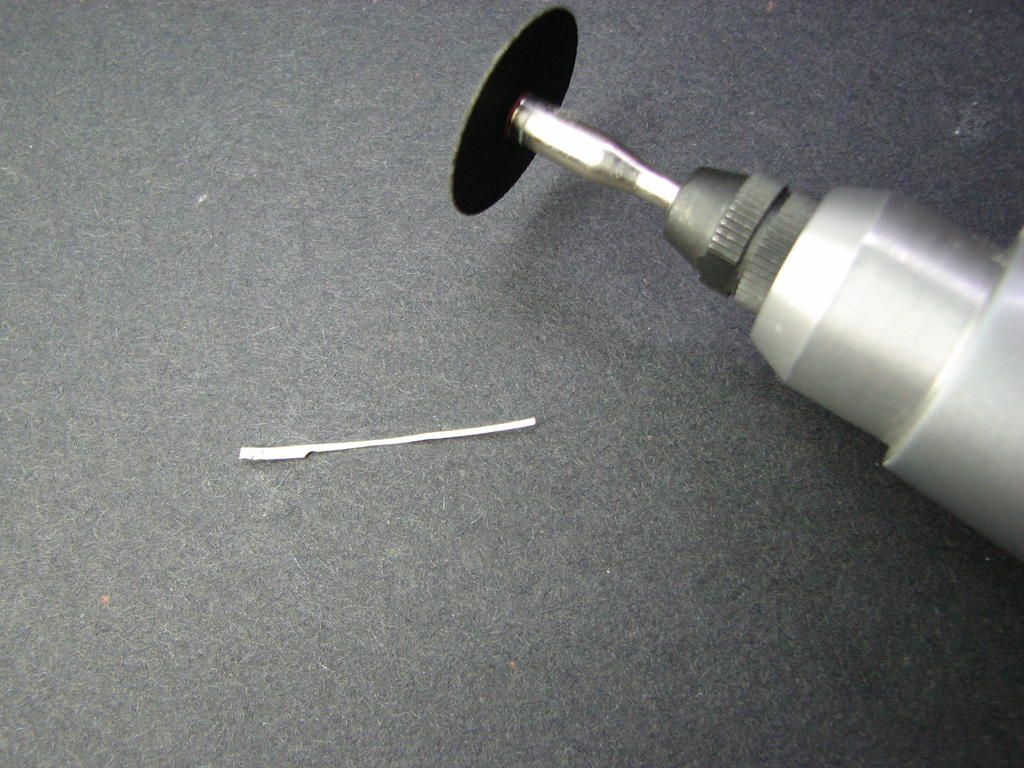
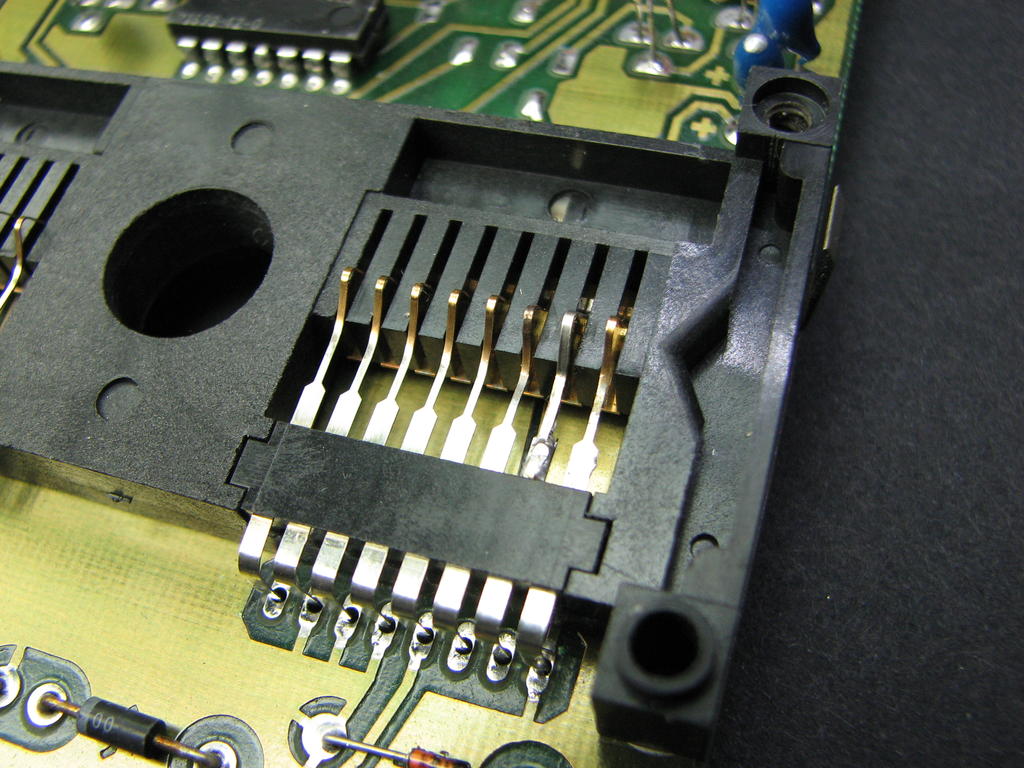
Cutting, trimming and shaping the tiny sliver of metal is a bit tedious. It has to be thin enough to move freely in it’s slot in the plastic frame that is still attached to the board. Eventually it looks about right. After applying flux to the ends of the new leaf and the ‘stump’ of the old leaf, the two are joined with solder. The entire contact block is then re-inserted into the switch frame and re-soldered to the PCB.


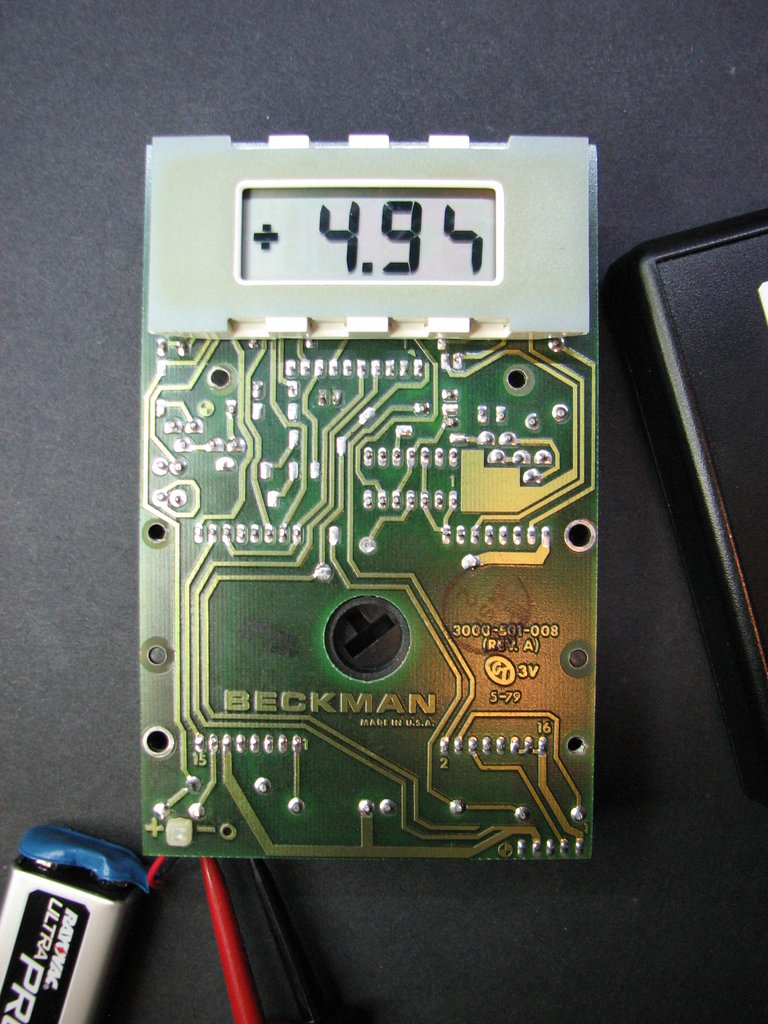
 Good news and bad news. The meter powers up and appears to work, mostly. However the ‘b’ segment of the ones (least significant) digit never comes on under any circumstances. Voltage readings are a bit off, and the decimal point is flashing. A flashing decimal point is usually the low-battery warning on Beckman DMMs, but the battery measures 8.8V.
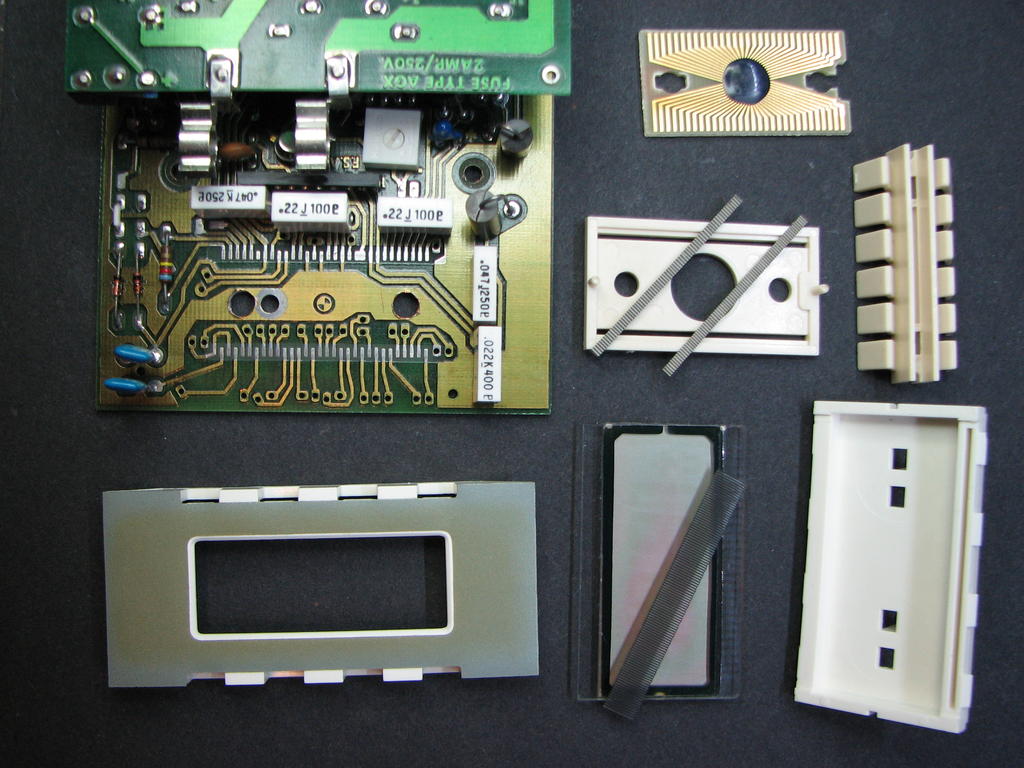
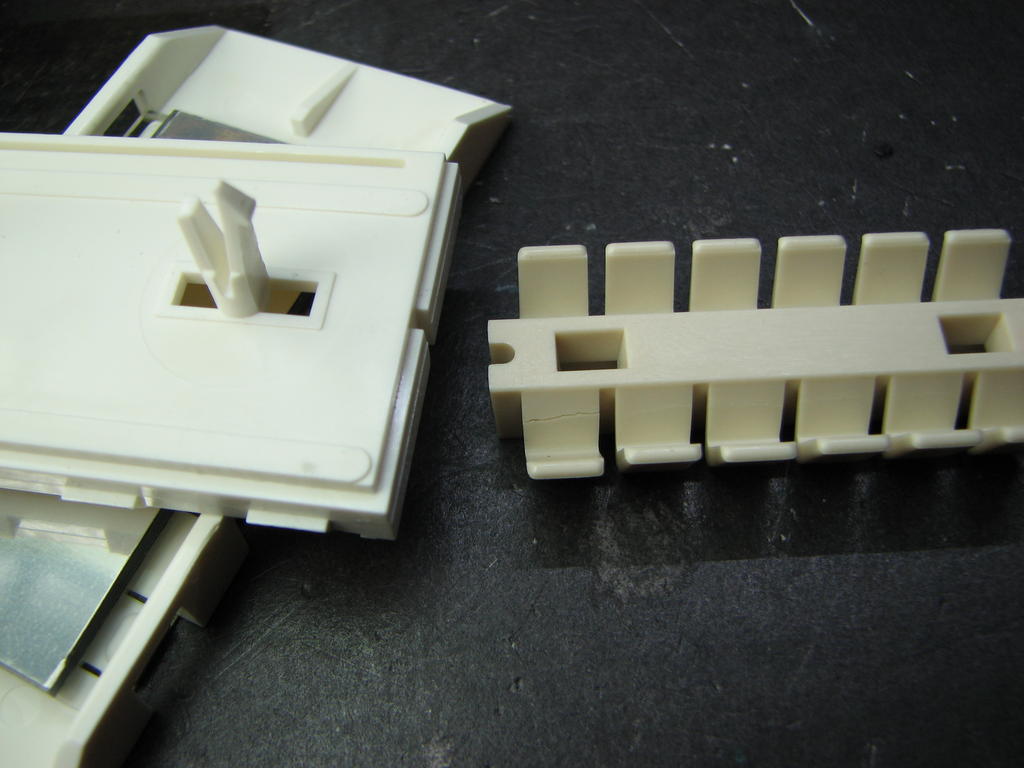
The LCD and main chip is part of a stack-up that includes 3 elastomeric connectors (zebra strips) and is often a source of problems. Disassembling this stack, cleaning and re-assembling does not improve the function of the meter this time however. While the stack was apart, I checked the LCD with a function generator (5Vpp bipolar square wave @50Hz). The segment in question does actually work, so it’s not the LCD itself. For some reason, it’s just not being turned on.
Up Scope
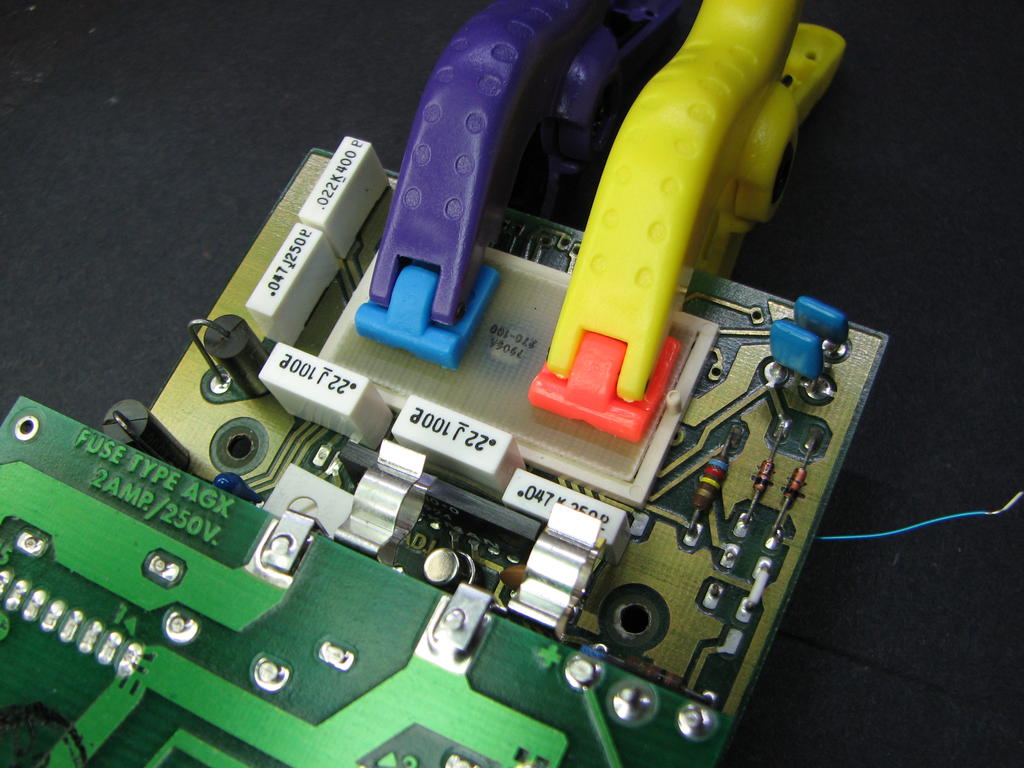
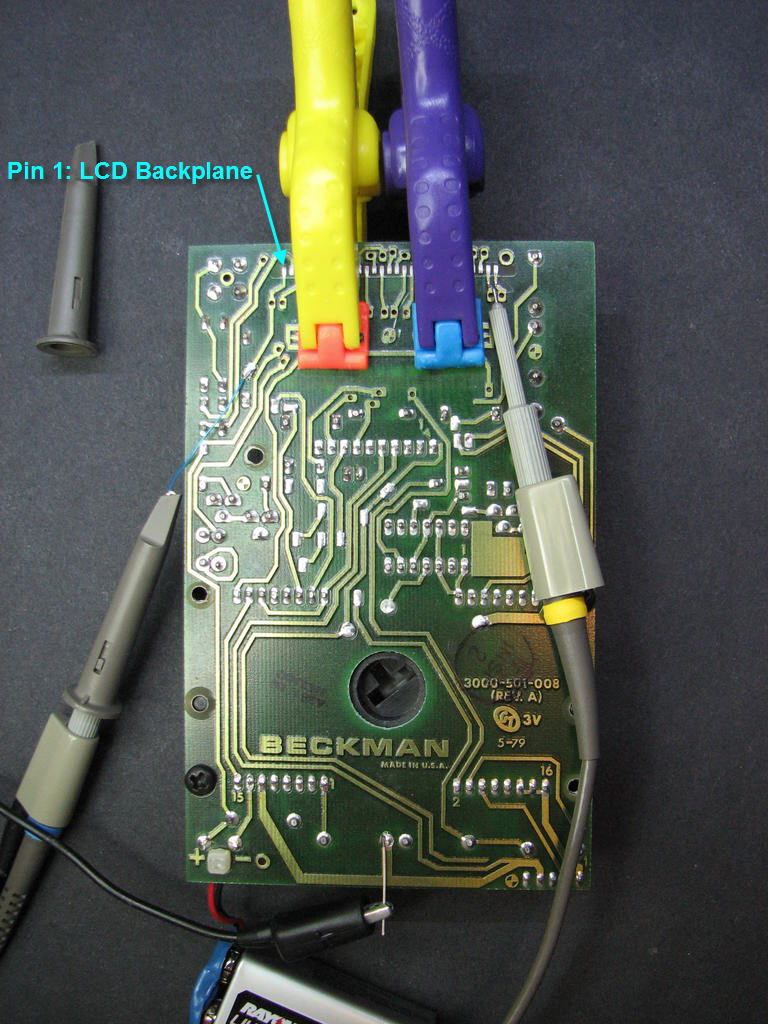
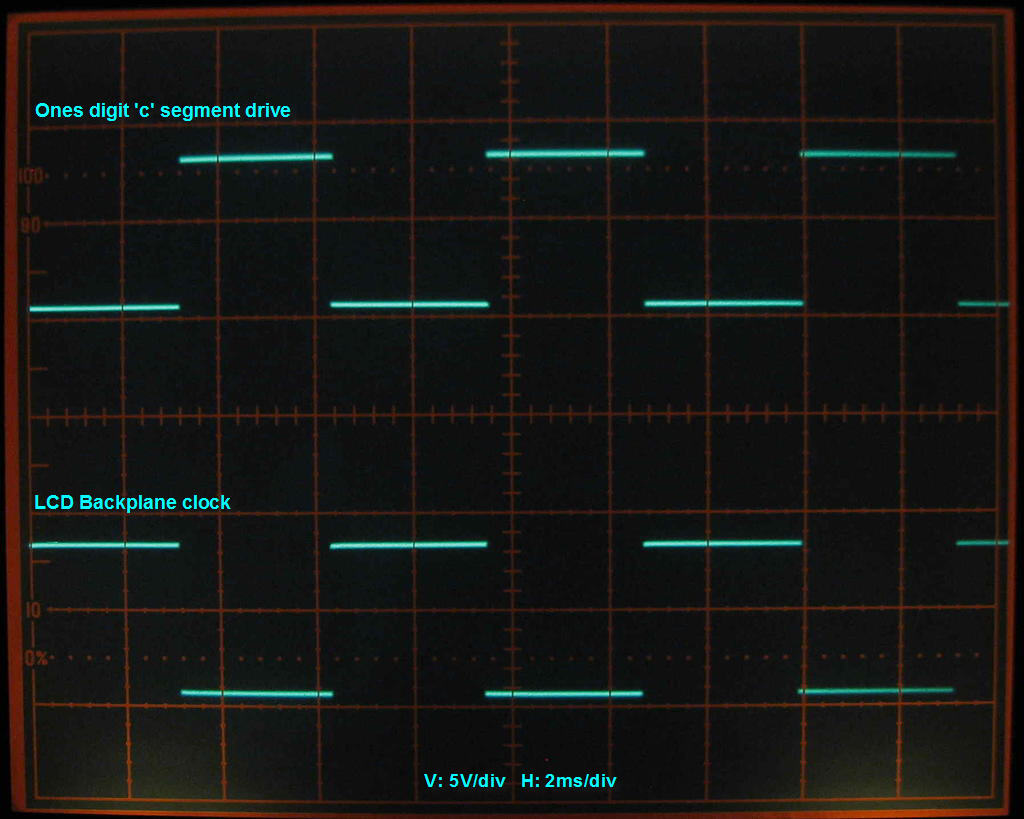
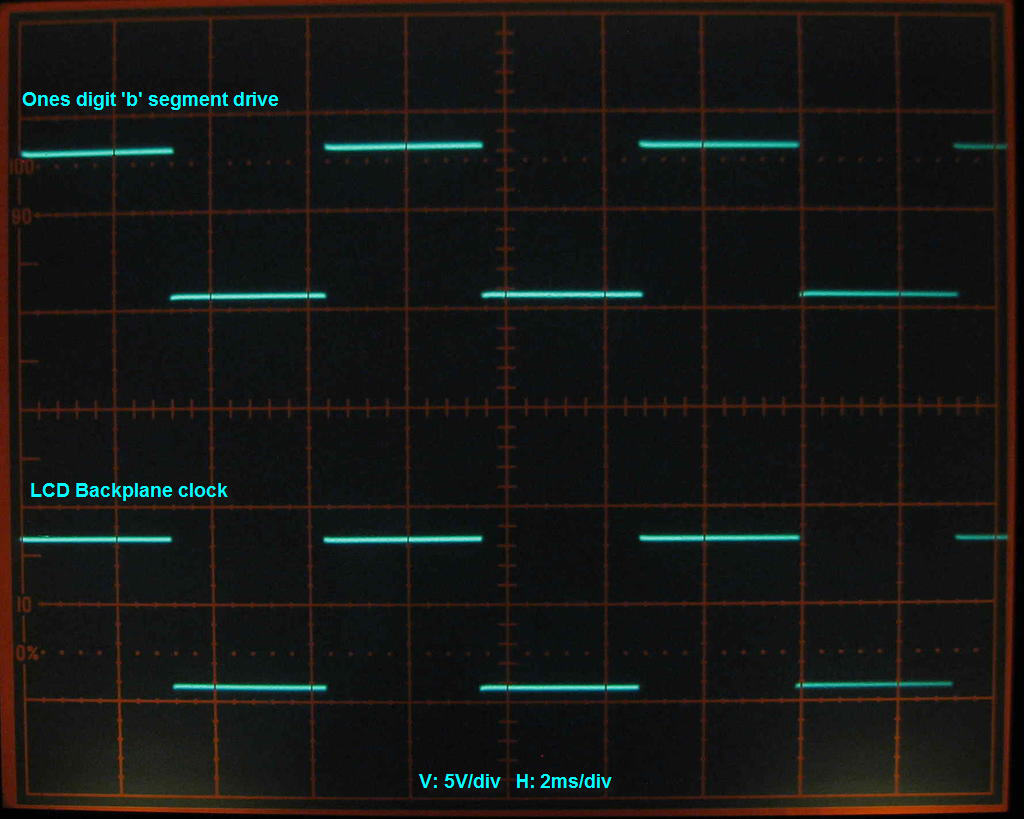
To see whether any particular segment is getting a signal to turn on, it will be necessary to compare it with the LCD backplane clock. ON segments will have a square wave that is out-of-phase with the backplane. OFF segments will be in phase with the backplane. It’s difficult if not impossible to probe any signals with the stack fully assembled, so to get the main chip to run but still provide access, a couple of plastic pony clamps were used to hold it to the PCB.
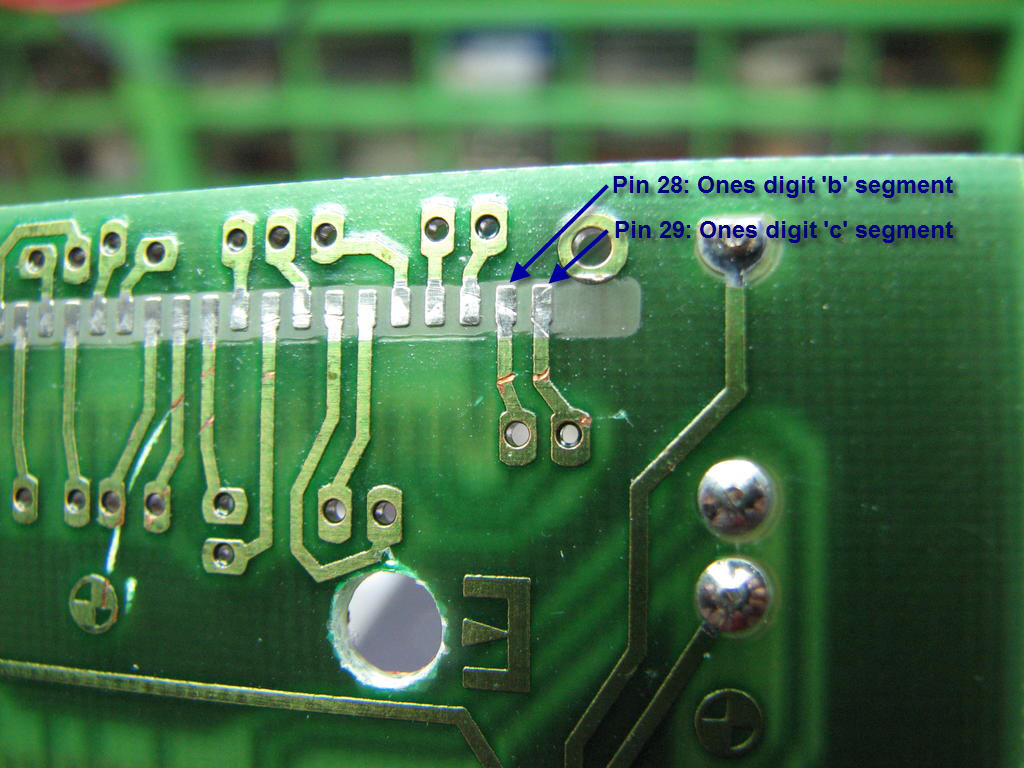
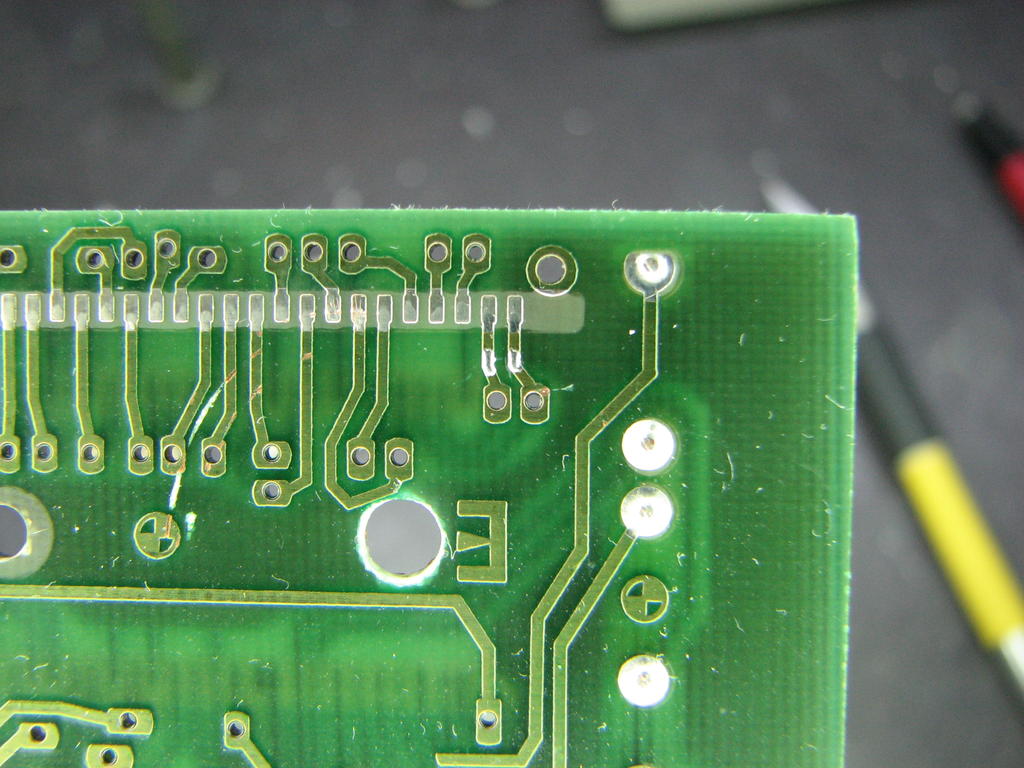
Probing the ‘b’ segment drive signal shows that it is always in phase with the backplane clock, no matter what function or range is selected, and even with the input shorted. It should be on to display a zero, so the conclusion is the main chip has a faulty gate in the path for this signal.
Scarecrow Needs a Brain
As mentioned earlier, Wavetek acquired Beckman Industrial and its DMM models. I happen to have a non-working Wavetek HD100 manufactured in 1994, with a design still very similar to this 3020. Looking at the main chip, I was surprised to find that even with a 15 year difference in age, the main chip in the Wavetek has the same part number (270-100) as the suspect one in the 3020! A quick transplant and it does appear that the older main chip is faulty, because the newer one works perfectly. The display is complete, voltage readings are correct and no more flashing decimal point.


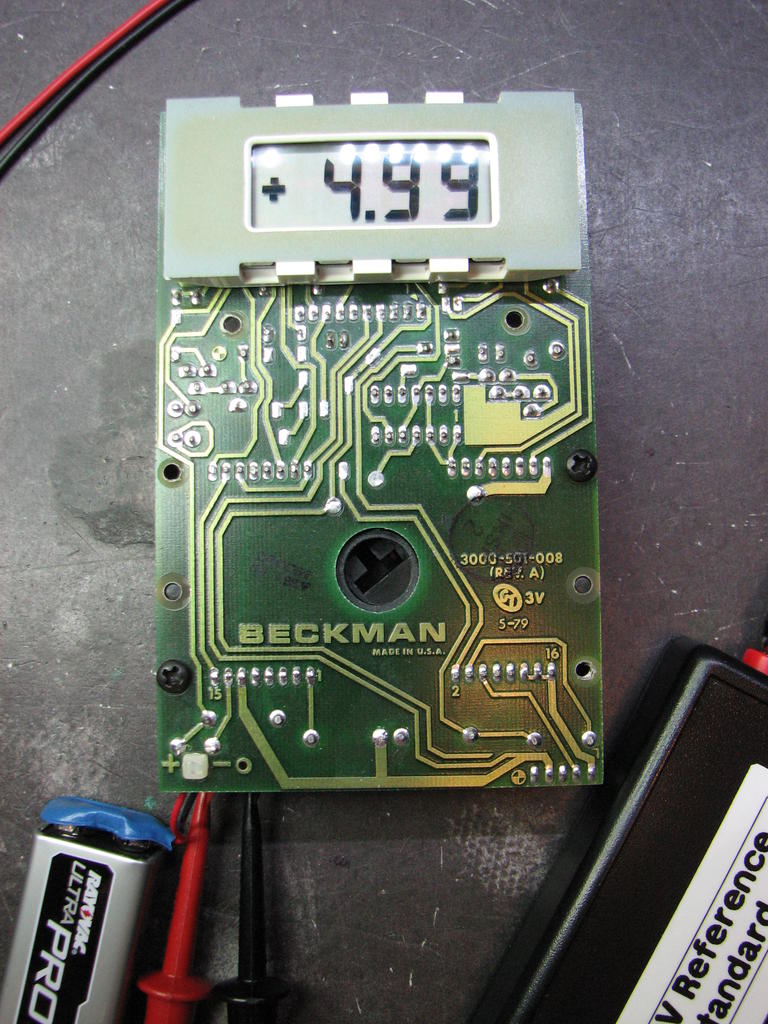
Success!
During a full checkout, the 10A range did not work. It turned out to be the plunger switch on top of the jack not quite making contact. Bending the contact a little fixed the problem. The rotary switch repair seems to be holding up well, so far no further glitches in testing. With a complete scrubdown and quick lens polish, this 34 year-old DMM is looking and working well again.
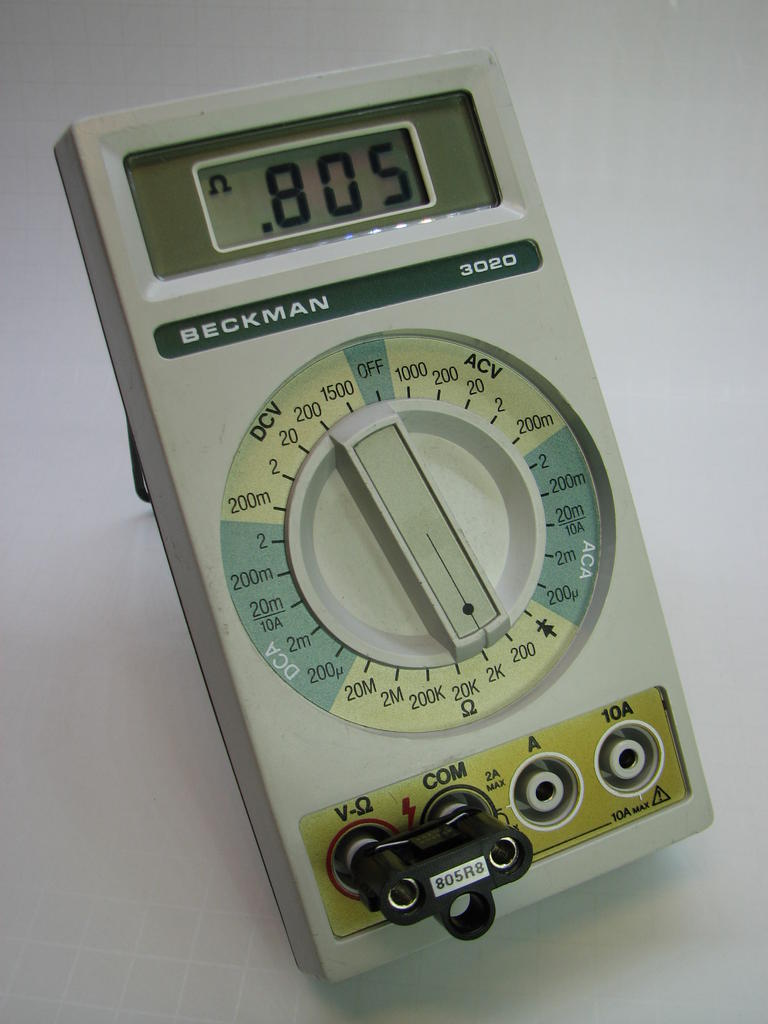
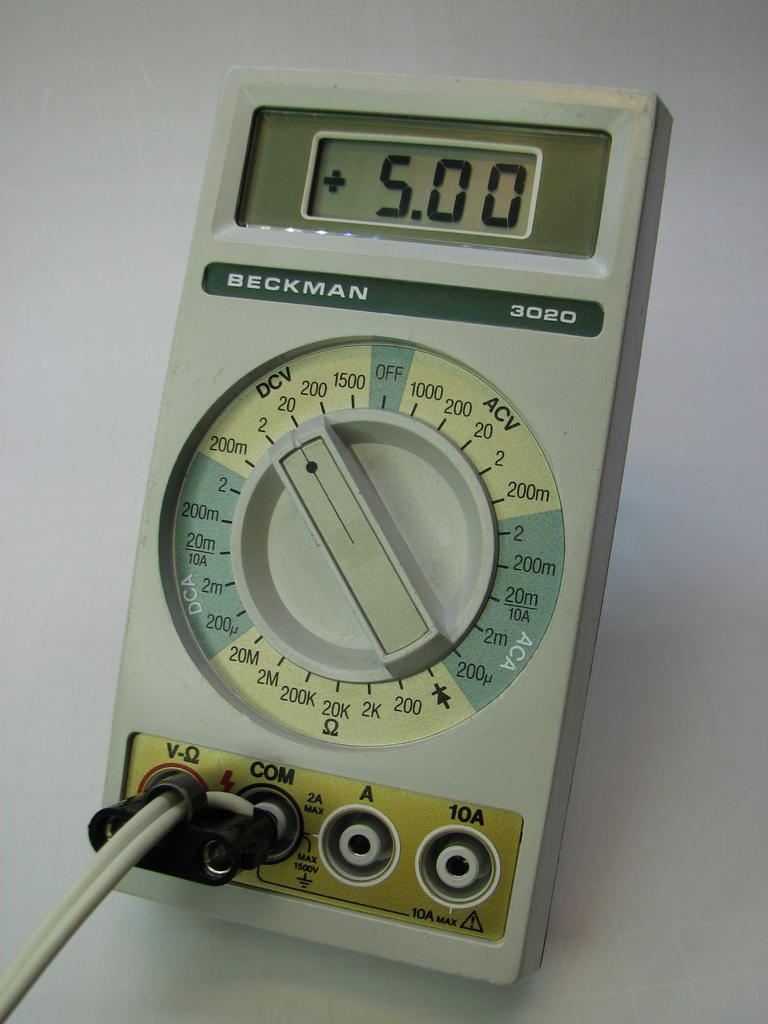
DMMCheck calibration check results for this Beckman 3020:
| Reference | Reading | Notes | |
| DC | 5V | 5.00 | |
| 1mA | 0.999 | ||
| AC | 5V | 5.54 | nominal for non-TRMS is 5.55 |
| 1mA | 1.111 | nominal for non-TRMS is 1.11 | |
| Ohms | 100Ω | 100.0 | 0.1 with leads shorted |
| 1K | 0.999K | ||
| 10K | 10.00K | ||
| 100K | 100.0K | ||

Please Mr. ModemHead, I need one or two spare pieces from Beckman 3020 multimeter, ¨the display and chip support ensemble” to repair my unit, that doesn’t put pressure on, to have a good electrical contact with rubber “cebras” bands, because the plastic support is broken.
Tell me some web o direction to buy this spare pieces o equivalent models from Wavetek, others, etc. if possible, by mail.
Thanks for your help
Sr. Alonso, I wish I could give you a good answer, but these units are very old and the only source of repair parts I know of will be from whatever you can find at boot sales, flea markets, eBay, etc. The only models I have experience with are the ones mentioned on this blog, but given that the parts from Beckman/Wavetek HD1xx models are interchangeable with this 3020, I would say it’s a good bet that most any 3-1/2 digit Beckman or Wavetek model that looks similar will have the same LCD support structure inside.
Just ran into this problem myself, here is how I repaired it.
Wow that was a repair of love 🙂
As ive been a c.b radio repairer the contacts just reminded me of the ones found in channel changers and other similar multipole multidisk switches.
The delicate fingers just press hard enough to make good contact, and when they fail the lcd display or bcd/binary codes produce jibberish.
Shame the main adc was ill as well, bet its an up market icl7106 or similar idea.
I must admit i do like the single knob digitals, i also have my very first multimeter i bought from tandys in the u.k back in the 1980’s, its a grey Micronta 22-191 digital with two knobs (not including the operator lol), one for range and the other for mode.
I do love the old beast, its served me well for basic repairs.
It does not get upset about r.f so much as the cheap-n-cheerfull meters of today.
Really nice restoration, quality beckman, Spot on as well 🙂
Thanks. You know I could have replaced those contacts with some from the HD100 that donated the main ADC chip, but what would have been the fun in that? 🙂
Unlike the early Fluke DMMs which did actually use the ICL7106 design almost pin-for-pin, Beckman looks to have gone their own way. Their 270-100 chip is functionally similar of course, but has a few more built-in things, like an AC converter. And so far, every 3-1/2 digit Beckman I’ve opened has the same one. It looks as if they got a lot of mileage out of it. Along with that ridiculous stack-up structure.
First handheld DMM for me was a Beckman and I trashed it years ago after it stopped working. I regret that, as I’m sure nowadays I would have the patience to fix it.
Ahh i too know the feeling of throwing something away.
Yes a real shame but you have saved one of its cousins lol 🙂
Many years ago when i knew next to nothing, i found a telefunken colour tv set being given away. (loved taking things to bits)
After pulling a few mustles i set it down and gave it 240v, yes it worked and there were loads of little leds lit up in the back, it was just like looking up at the stars.
But, and there allways is one lol, the red gun was dead so the picture was worse than black and white, i tryed my hardest to find the fault… no i failed 🙁
After i had given up i broke the set up into parts and threw some of the very odd pcb’s into our old coal shed…
Many years pass, visual wobble effect lol, i found just the colour decoder board and thought “hmm high voltage video transistors” so out they came, later testing showed the one from the red was o.c, i just stood there with the one in my digits and swore to the sky, i was so pissed off that it was a perfect tv all those years ago and if i knew more about it, a £1 transistor would have fixed it.
It was sods law that kept only the faulty part for me to feel like a pillock years later lol.
Pillock. Heh. I learned a new word today. Great story.
It was interesting to read it though I’ve googled on how to calibrate one of those ultra cheap chinese ICL7106 clones called DT9205. It has 3 trimmers inside, but no data which is for what :-(.
Help I need to replace the 4 case screws on my 3020, they are MIA any ideas?
thanks in advance./kad
The case screws in this Beckman 3020 are standard 4-40 x 1.2 inch Philips-head screws. Should be available wherever small hardware is sold.
Hi.
Someone gift me the same multimeter a few days ago. The guy he had this, he was working for the CERN back at 80’s-90’s and now he has passed away. This multimeter was abandoned lot of years into a closet and the battery acids had ruin the aluminum covers, but fortunately the circuit has not affected, neither the contacts of the rotary switch.
All was seems ok, except from the display, that it has a discoloration at the middle, it was working ok, but I noticed that the measurements were wrong and when you was pushing the display from behind, the measurements were changing. Also the measurements were not stable at all and the trimmer didn’t seems to correct something.
I decided to disassemble the display and as I removed the plastics, it dropped from my hands and broken at a place, so afterwards the screen started becoming black at the right corner. I noticed also that the plastic holder at the back, had broken like yours, so finally I tried repair it with instant glue and hot gun glue. When I installed it, it is almost works correct, sometimes it seems to loosing a line, but at least the measurements of the ohms and AC volts seems to be correct now. The only measurements that seems to can’t change are the DC ones. Whatever I have tried, when I measure 12v, it shows ~40v and if I touch the one of the big diodes at the left back side of the display, it shows around ~16v. Of course when I push the display, it shows whatever, so I don’t know what is wrong finally and I almost gave up.
I really like this multimeter and I want to fix it, so can you suggest me any place on internet that I can find a display about this? Also do you have any idea why it doesn’t measure correctly the DC voltage? I mean what could be wrong about this?
The majority of the functionality of this design is within the multi-function chip (270-100), so if that stack-up of plastic clips and parts is not absolutely solid, the meter may exhibit all kinds of problems.
I do not know of any place to get parts for these models except for buying other old units for parts. The good news is that there seems to be a lot of commonality between all the 3-1/2 digit Beckman models that look similar, with the big rotary switch.
I hope to be just the display the only problem..
I found at ebay some simular yellow beckman multimeters for parts, but all of them belongs yo americsns and they dont ship to Greece.. 🙁
Anyway, I will have my eyes open until to find one, one day..
Hi from New Zealand and best wishes for 2014.
thanks for this wonderfully detailed teardown and repair. It gave the confidence to buy a Beckman 3020 (with manual and “carry case”) on the local version of eBay. I was lucky and this meter is fully functional and looks to be working OK on all settings
Its external body and LCD screen have 30+ years of accumulated dirt/dust and I’d like to clean it up so it looks shiny clean like your one in the pictures. Would you be able to inform me as to how you cleaned it without cleaning off the markings (might also make a subject for a post?).
Regards
Paul
Congrats on your vintage DMM acquisition! I like your idea for a blog post, so expect one in the next few days. But in the meantime, the basic idea is complete disassembly, with full immersion and scrubbing of the non-electronic pieces in household soap/cleaner and water. A bit of effort with rags and toothbrushes and then a thorough drying in front of a fan takes care of most grunge. I usually polish up the clear LCD lens with plastic polish from the auto parts store, which will remove hazing and light scratches. Markings made with permanent markers (Sharpies, etc.) can be faded with alcohol, but are probably never going to be 100% removed. If anyone reading this knows how, please tell!
pleae I am looking for a Beckman digital multimeter series 2000 mod 2020 the rubbergasket for the meter
Kann you help me??
Or would you know where I can purchase one???
hi, thankyou for your web-sides.
I am repairing the same tester, Beckman 3020.
In my exemplar burned a component, I think a diode, with code MP5010-7919, but I am not sure.
I hope there are no more defect components: display goes on but it’s not possible to use the tester because the measuring has no function.
Do you know what this it and where can I find it? Where can I find the electrical diagram of this good tester?
If you want I can send you pictures.
Many thanks, best regards
Domenico (Italy)
I’m trying to repair an old 3020. My problem is that the reading is not stable. The unit was running perfectly until one week ago. No problems have occurred, I think, but now ohm readings show a fixed 3..2…3 ohm more on the 200 ohm f.s., 30…20..30 ohm more on 2K ohm f.s., 300…200…300 ohm more on 20K f.s. and so on. All VDC measurements show a basic -20…-30…-20 mv less on the 200 mV f.s., -200…-300…-200 mV less on the 2V f.s. and so on. Over all, all readings are unstable – not firmly fixed-.I think it is a fatal error – sigh- on the ADC converter, but I’m not sure. Any ideas ? Thank in advance. Alessandro from Parma – Italy.
The sudden failure is troubling, but I can say that practically every one of the Beckmans with this design that I’ve opened up have required disassembling the LCD/main-chip and cleaning all the PCB contacts and the elastomeric connectors. Symptoms can be unstable readings and missing LCD segments. It is not a fun job and you have to be careful not to make the problem worse by cracking any of the brittle old plastic parts.
I can say one encouraging thing, if the meter reads anything close at all, odds are that it is a problem outside of the ADC.
You are right! The problem was on the contacts of the rotary switch, i had to clean it with compressed air without de-soldering the plastic block of strips. Now it seems to work. Zero is stable, ohm reading is correct, my old 3020 (a precious gift of my father dated 1980) came back ! Sometimes it happens…
Very interesting read 🙂
I got a Beckman BP3020 which does not work at all. I could donate parts of it if needed.
And I got a 3020 which works quite well except some irregularities in some of the DVA-ranges (like 2A range behaves like 2mA).
Mine is still working, although I don’t use it, it’s just a personal museum piece. But there’s always someone looking for parts for these aging beasts…
Hello!
Do you have yet that Beckman BP3020 which does not work at all.
I have a Beckman BP3020 with LCD problems. The LCD has a disturbing area of discoloration in the middle like in a post.
I wish your LCD from Beckman BP3020.
Thank You!
Sorry for my poor english!
Out of interest, The Micro behind the LCD Stack on the small COB board, is the same for all this type meter it appears. Ive just got hold of another three meters for pennies, although should have been just two 330–three turned up, all rather battered, the extra one a 310B, practically fell apart, rear cover was in several pieces, but I had a spare cover. All have good chips and displays, but broken plastic clamps for the chip on one–Usual trouble…
–For such a brilliant meter–What were they smoking when they designed that daft arrangement!
Ones I have and examined/cleaned the elastomers etc are 300A, 310, 310B, 320B, 3020B, two 330. and a Wavetek 310B
Age wise we are looking from 1979 to early 90’s (Guessing for Wavetek, there’s no date)
All above use the 3000, 270-100 ADC/Micro chip COB, so will be interchangeable with all of this type model. (Inc the 330 RMS meter, which surprised me) The displays likewise will be compatable. I’m just guessing–but I’ll bet the Bench meters from same era, 350/360 will use the same chip and displays too….
Guess I’ll have to get a couple of bench meters, 350 and 360 to complete the set now!
I came to the same conclusions about the use of the 270-100 chip, in all these similar 3-1/2 digit models. Even the newer Wavetek-branded ones. And yeah, that stack-up arrangement is nuts. I got tired of messing around with these Beckmans, after the materials get old, it just gets too fiddly. At least the more recent models use screws instead of clips.
I Have a 3020B I bought new, and a few other Beckmans. They all have failed the same way for me. The numbers just jump around in any mode. But in ohms, it will occasionally read OL, if you short the probes, it goes back to random numbers. Also the beeper will sound once in a while in ohms when it is just sitting, without touching anything. I just bought a used HD110 on eBay, and it does the same thing. I got my money back and the seller told me to keep it. I’m retired, but would like to have one good meter around. Where do you think I should start, or is it hopeless? I would love to get the 3020B working, then I would donate the HD110 to anyone who needs it. You have a great hobby.
All Beckman repairs should start with a thorough clean-up. Use IPA (>90% isopropyl alcohol) on the elastomeric connectors for the LCD and main chip. Use compressed air for the rather delicate range switch leafs. In my limited experience, this clears up most of the funny readings and odd behaviors on these meters.
Thanks, your suggestions worked, and it is back like it used to be. Now I will try to repair the same problem on my HD 110
Just wanted to thank you for your site. I had a Beckman back when I was a Field Engineer for a computer company back in the early 80s. I just picked up a 3020 off ebay, seller disclosed it was not working but the case was in like new shape so I figured it was worth a try. Turns out it had been dropped and the LCD posts were broken. Someone had been in there because the “W” shaped retainer was not even in the case, but luckily everything else was. I cleaned all of the contact points as you described and used a modification of your fix for the retainer by cutting down and shaping a small piece of aluminum tube I had, though it took a couple tries to get it right. The second version of it worked, seemed like the “feet” of the tube had to be located directly over where those pesky elastomeric connectors were. I knew I was close when the display read 1.8.8.8 on power up, regardless of function selected. A little more playing with it and it’s been working perfectly since. Reading your posts before I messed with it kept me from doing something awful to those elastomeric strips. Thanks again Mr. Modemhead, I now have a great working meter and had a little fun repairing it.
hello i have a beckman 3020. i bought this new in 1980. lately i noticed the ac dose not read correctly ie reading 98vac when reading house voltage of 120vac. ive disassembled and thoroughly cleaned the unit but still have the same results. vdc,ohms,seam to be working correctly i havent tried amps. can you tell me how to calibrate the ac input?
also there is one reostat on the board what is its function? any info would be greatly appreciated. thanks
The one trim potentiometer (rheostat) marked “Full Scale” is the only calibration adjustment that I’m aware of. Set the meter to 200mV DC range, apply 190.0mV DC, and adjust the trimmer for a 190.0 reading. The AC range depends on this, plus the value of some fixed resistors.
thank you very much for the info
ps is there any service info available for this model or schematic ?
The closest bit of documentation I know of is a manual [download here] for the 300, 310, and 330 models. All these old designs are based around the same 270-100 chip, so there’s a lot of commonality.
Hello,
I have a beckman 3030. I think the ADC got a belt as it just reads 1 on all ranges. The decimal point still flashes to indicate a low battery. Any ideas greatly appreciated.
J.
Any test input over 200mV could cause over-range indication if the front-end scaling circuitry is faulty. Test the meter in its 200mV range, with say 100mV as input. This is a better indication of whether the ADC is bad, because no voltage *should* exist in the front end that could put the ADC over its full-scale input.
Hi, I have a tech 310 that I just (almost) got working. In all ranges except ohms the first digit is always reading 2, or 3, or sometimes 4. It appears to be working OK otherwise. It will do it on 1500VDC range with the leads shorted so it’s not just, uh whatever you call that when it reads some voltage on lower scales when the leads are not on anything. I believe the center segment on that digit also always stays on. When you do measure a voltage it adds that number to the actual voltage.
Also, I always have the worst luck with the zebra strips, I clean everything with alcohol but just don’t always get it to work the first or second try.
I live in Vero Beach, Florida and some years ago I bought a Beckman 3020 at of all places a model airplane contest. They were having a small “flea market” if you will & a gentleman had the Beckman 3020 on his table for $10. It has served me very well since that time 20+ years ago. Recently I went to use it & when I turned the dial to change the scale the handle broke off right where it exits the meter face. I don’t think super glue or any of the plastic glues will work here because it is broken at an angle. Does any one out there have replacement dial they might part with? Please let me know. I am lost without it. Thanks very much for your help & any assistance you can provide so I can get this repaired will be appreciated. I will be happy to pay for the part I need. You can reach me at my e-mail address.
If you carefully peel the label material off the center of the knob, you may find a little wedge-shaped piece of plastic you can pick out, which releases the adaptor that connects the knob to the T-shaped hole in the rotary switch. I assume this is what has broken. You may be able to use your ingenuity to make a strong re-connection without depending on glue…
I *think* every Beckman model with that characteristic big rotary switch has this shaft/connector thingie in it. So monitor eBay for a few months for 30×0, 30x, HD100 and HD110 models. I have seen some of these listed in “parts or repair” condition go for $20 or even less.
Ohm meter not working.
I have a 310. (Looks very much like your photos but with a red background behind the word Beckman.)
The DC volt meter works but not the ohm meter. The display just reads OL on any range setting. Or sometimes the display shows changing numbers for 3 or so seconds before showing OL.
When I opened the case, I found some oil on the battery which I wiped out. the switch leaves looked fine.
Thanks for any suggestions. I have some tools: several screwdrivers, a soldering iron and a heavy Stillson wrench.
Mine just bit the dust after about 35 years. It was my go to DMM during all that time and abused it severely. The display was blackened out in the corner and now just shows garbage. This, in the middle of troubleshooting my 141T spectrum analyzer. So I ordered a cheap replacement and will get back to the Beckman soon and attempt repair. Maybe a good cleaning will do it. I’ve got too many unfinished projects on the bench.
Hello Mr. ModemHead,
I read your report about the repair of the Beckmann 3020. I was impressed.
I have defect Beckmann rms3030. The LCD-Display has a big black spot in the middle, it looks like if you press hard on a LCD with a finger. My first hope was that were some restraints on it by the display support. I disassembled the display but the black spot is already there. Could you give me a hint? Or do I need a new/other LCD?
From your description, it is likely to be the rear polarizer (which is reflective.) I had a Fluke 77 like that once, I managed to peel the old film off with a razor scraper, cleaning the residue with citrus solvent. I replaced it with a piece of generic polarizing film, on top of bright white paper. Contrast was a little less than original, but it worked.
I have a Beckman 3020 (long time not used) and found in it a battery 9V rechargeable.
Is a normal 9V battery (not rechargeable) also ok?
Thanks
Yes of course.
Another similar model you can hunt down for parts is the Kent-Moore Tool Division J 34029-A. It looks just like the Beckman 3020 series meters, except with a black case, and if you open it up, the circuit board is stamped Beckman 3000. It’s obviously a relabelled 3000 series Beckman of some kind. I noticed though that it has a 2A 600V fuse where the Beckman 3020’s I’ve seen had 2A 250V fuses, so I’m thinking maybe this 34029 is the equivalent of the Beckman 3030…not sure. I’ve had this meter since the 1980s…got it as a gift from someone…and it still works. Every 10 years or so I put a new 9V battery in it. I bought new leads for it about 20 years in after I fried one with a short. I calibrated it to 2 other new meters a couple years ago. I don’t use it a lot, but it has served me (and my neighbor who likes to borrow it) for about 33 years now. Not bad. Still going strong. Ha ha.
Ever heard about Beckman HD110 PTL ? Got this dmm and wondering what the PTL is standing for? This item function as a pristine.
I have a Beckman 310B dmm
it was working fine one day, and then I only get the OL on the display on all settings.
any help what to check for?
thanks
I have a Beckman 3020B that seems to work fine. My friend gave it to me when he worked at Beckman, out of college. I don’t use it much because my other meters are smaller and I don’t care if I break them.
Thanks Mr Modemhead for this site and to KG for the Kent-Moore Tool Division J 34029-A suggestion. I have a Beckman Tech 310 DMM that has worked beautifully since I got it as a Decca field engineer in the 1970s. It suffered for the past decade from gradually encroaching black pixels which finally obscured the last digit. Last week I found a non-functioning and dirty Kent-Moore meter on eBay for $10 and have just cannibalized the LCD display. It took some cleaning of the elastomeric strips and wrestling with the display clamp but I got my Tech 310 working. Now good as new and ready for another 40 years – very satisfying!
Hallo i by accident put 12v dc on 200 ohm resistance range. that damaged 200ohm
+ diode test. Can meter be repaired or not Please reply.
Sorry, it is a Beckman 3020 multimeter. Hope you can tell me which part is the culprit and where to buy it.
Thanks.
I just found a Beckman 3020 B Multimeter at work that we don’t need anymore. Works like a charm. I’ll sell it to someone for $100. Any takers?
I have a Beckman 3020 multimeter, case and all, doesn’t work. Do you want it?
I have a Beckman 3010 from 1979. It’s dead.
Battery connection to the main board is OK.
Fuse is OK.
I disassembled the display and cleaned all the copper pads.
No success. I don’t have a repair manual or schematic. Where do I begin?
Well my turn now to get problems with my Bechman 310B. It show some measure even with no input leads connected, the chip is done… So I’m looking for 279-100 chip to replace and unfortunately no more suppliers for it. Can I’ve one from you guys?
Thanks for the article on the Beckman 3020. As field technicians we were issued these meters back in the early 80’s to replace our Simpson 260’s. We found them to be rugged and useful back then. I came across a 3030 at the local thrift shop recently, bought it on a whim and set out to repair it. With your article and a donor 3010 from ebay, I was able to get it back running. It seems so clunky using it now compared to some of the modern meters. Now I have to decide what to do with the remnants of the 3010.